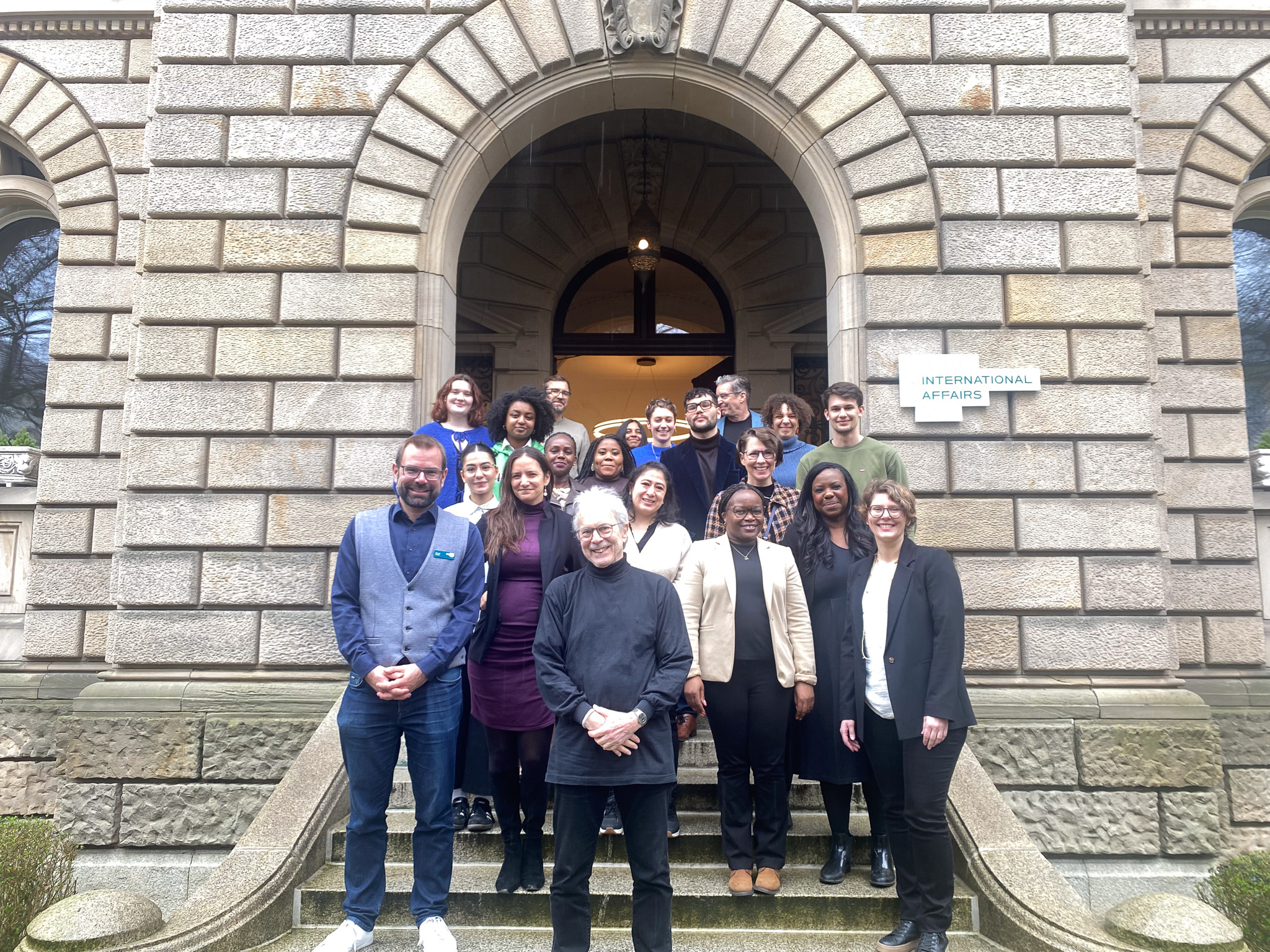
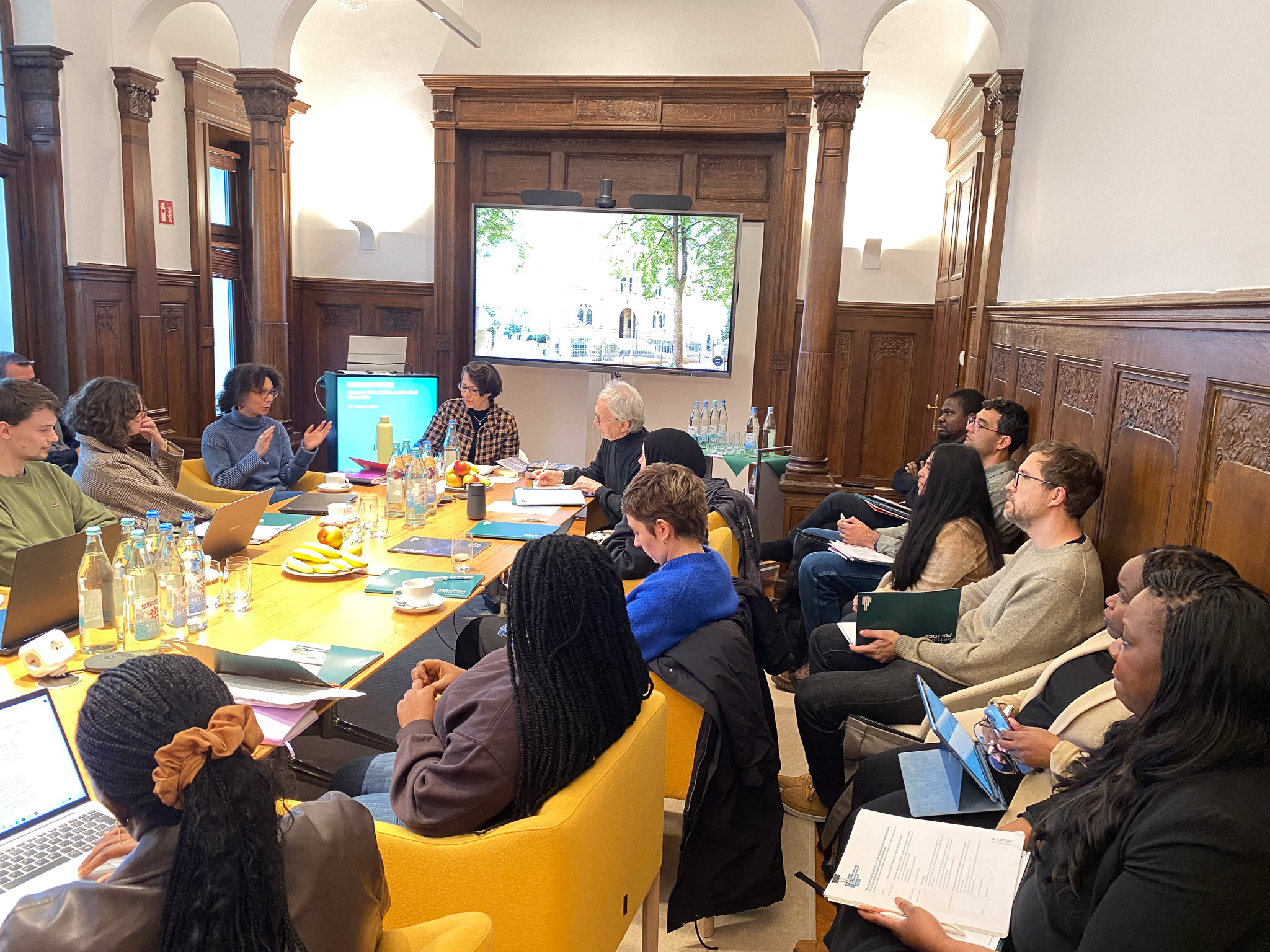
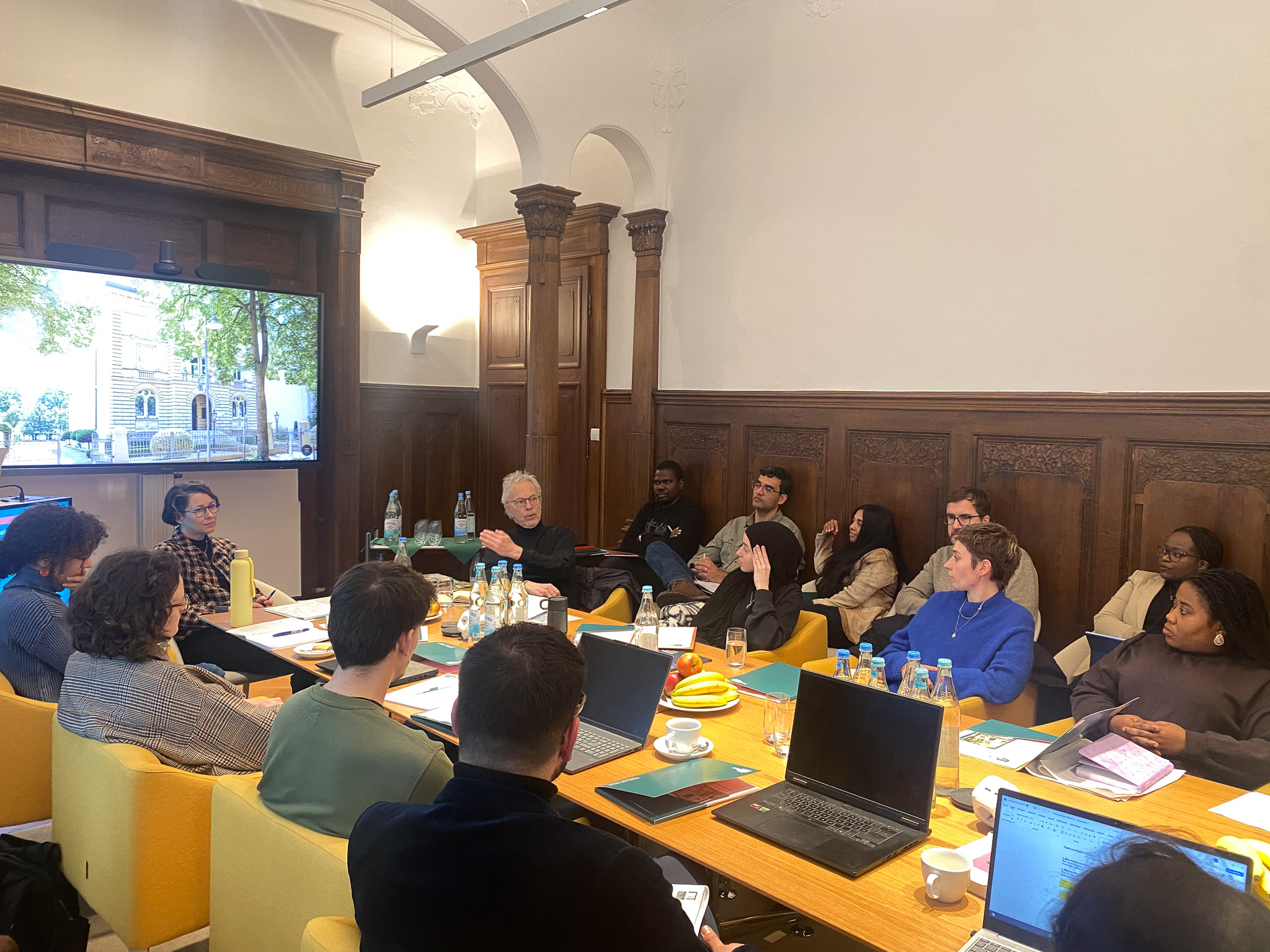
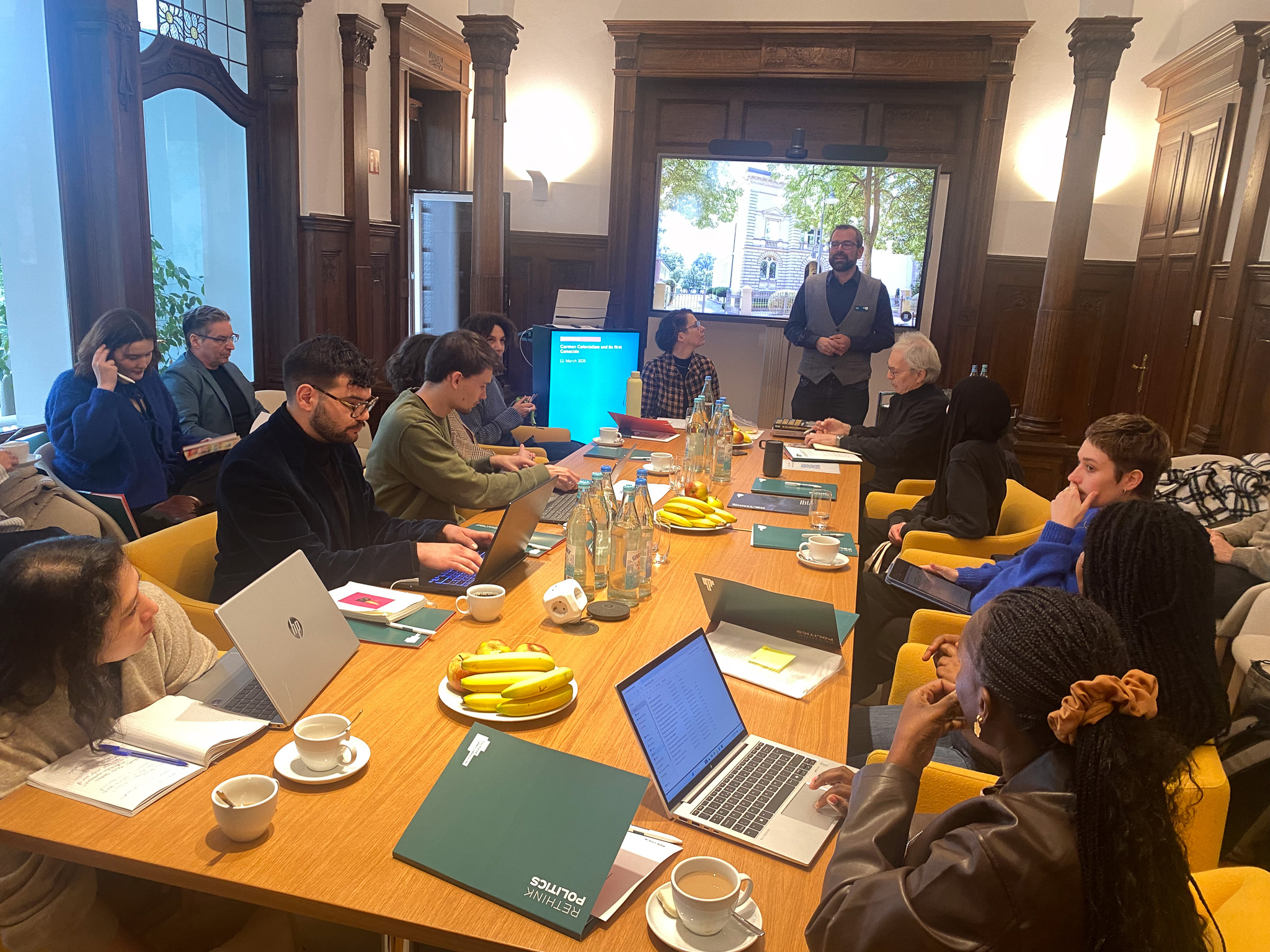
In cooperation with the Bonn Centre for Dependency and Slavery Studies (BCDSS), the Centre for Reconciliation Studies, and the Global Heritage Lab at the University of Bonn, a workshop on postcolonial perspectives on current political challenges, with a special focus on the case studies of Germany and Namibia, was held on 11 March at the Academy of International Affairs NRW. The discussions focused on the academic work of German-Namibian political scientist Henning Melber and his latest publications.
Henning Melber began his remarks by stating that although he has not lived in Germany for 35 years, he nevertheless took the risk of writing a book about the long shadows of German colonialism in contemporary culture. Unlike in other countries with a colonial past, such as the UK and France, the topic is still hardly present in Germany. He diagnosed a colonial amnesia, particularly in politics. Strictly speaking, his book does not contain any new knowledge, but rather compiles a wide range of knowledge and literature that actually exists but has not yet received the attention it deserves. His presentation was followed by a lively debate on German remembrance policy. Topics included the self-perceived exceptionalism of German remembrance culture with regard to the Shoah and how the specific attitude expressed therein obscures the view of a broad societal reappraisal of the colonial past.
The term and concept of reconciliation was also intensively problematised. Henning Melber advocated above all for awareness and the capacity for empathy. In a second panel in the afternoon, master’s and PhD students in particular were invited to contribute their perspectives. Two texts by Henning Melber were discussed in depth. There was intense discussion about the concept of genocide, how it can be defined, what can be understood as genocide, and how this is connected to other discourses. The question of how exactly to articulate an apology and how this can be expressed in official state treaties was also a topic of debate.