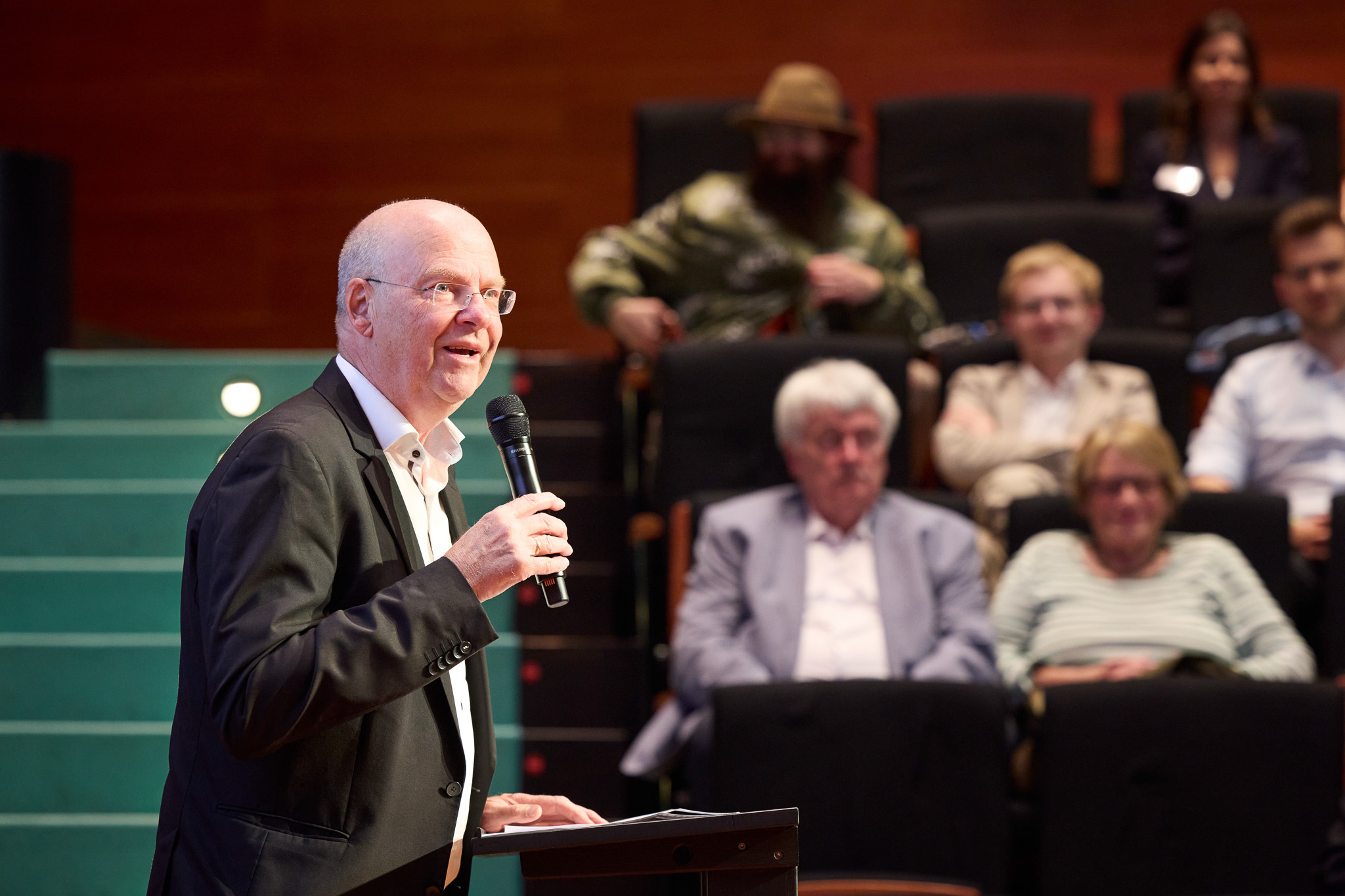
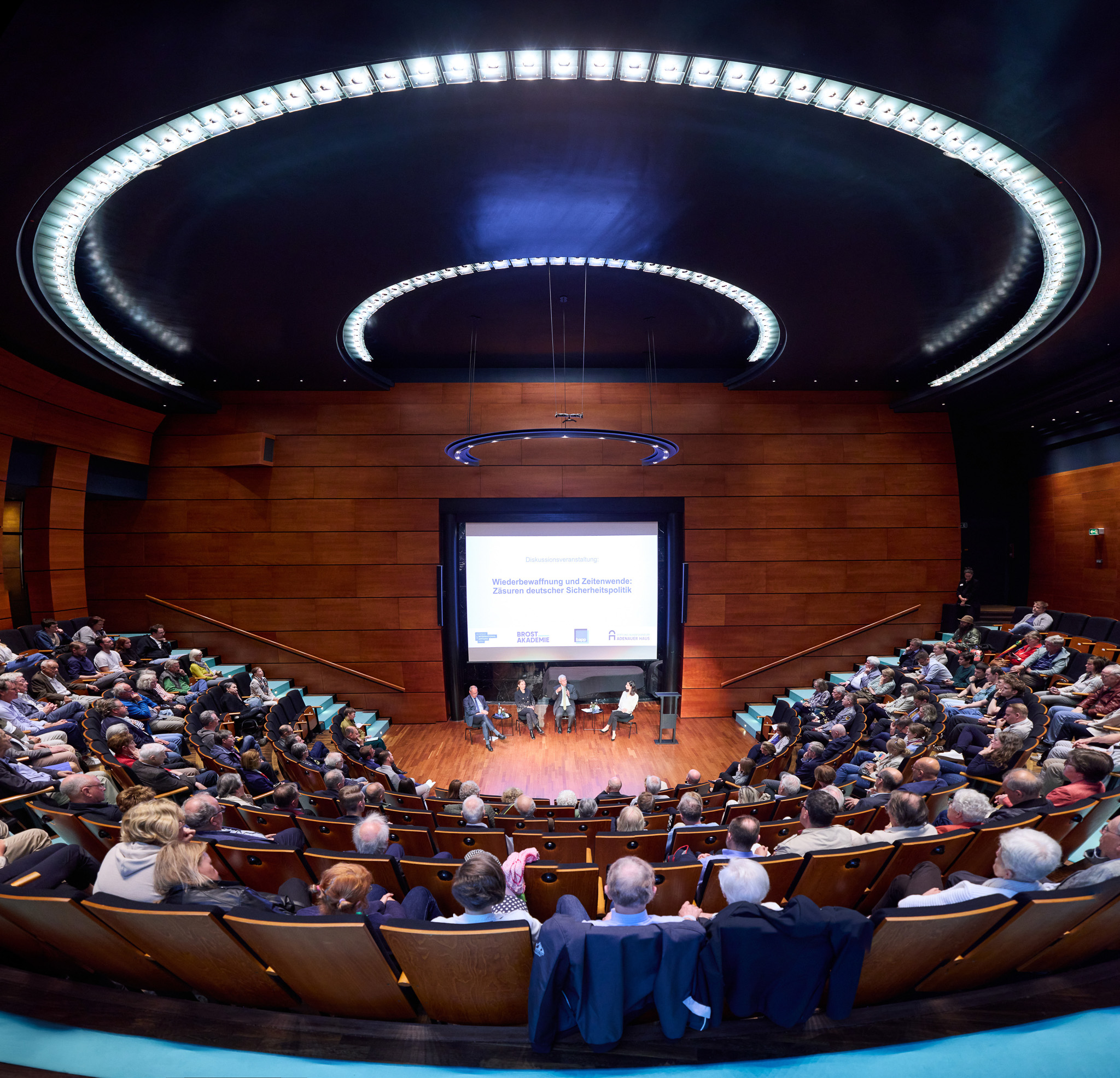
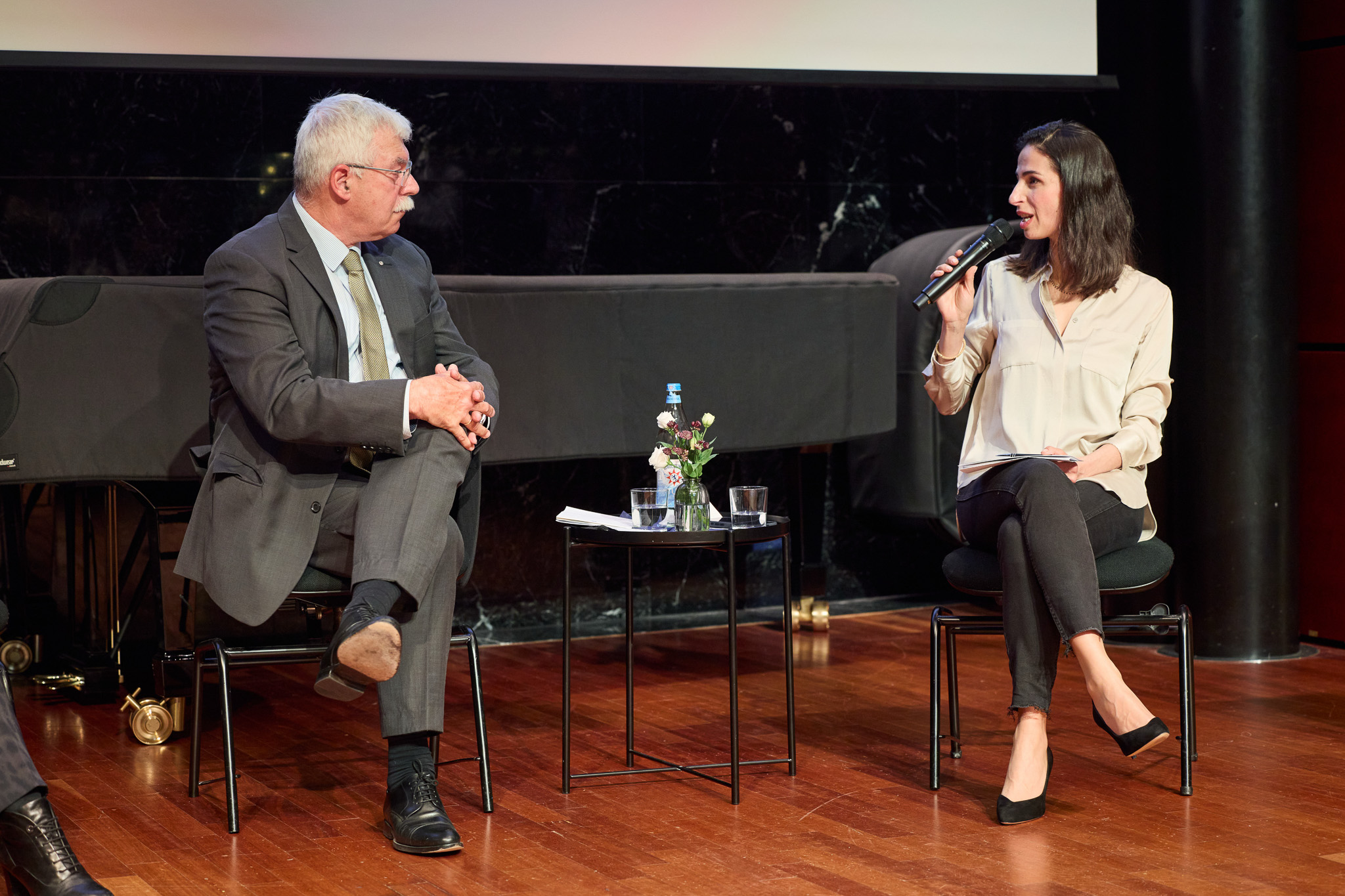
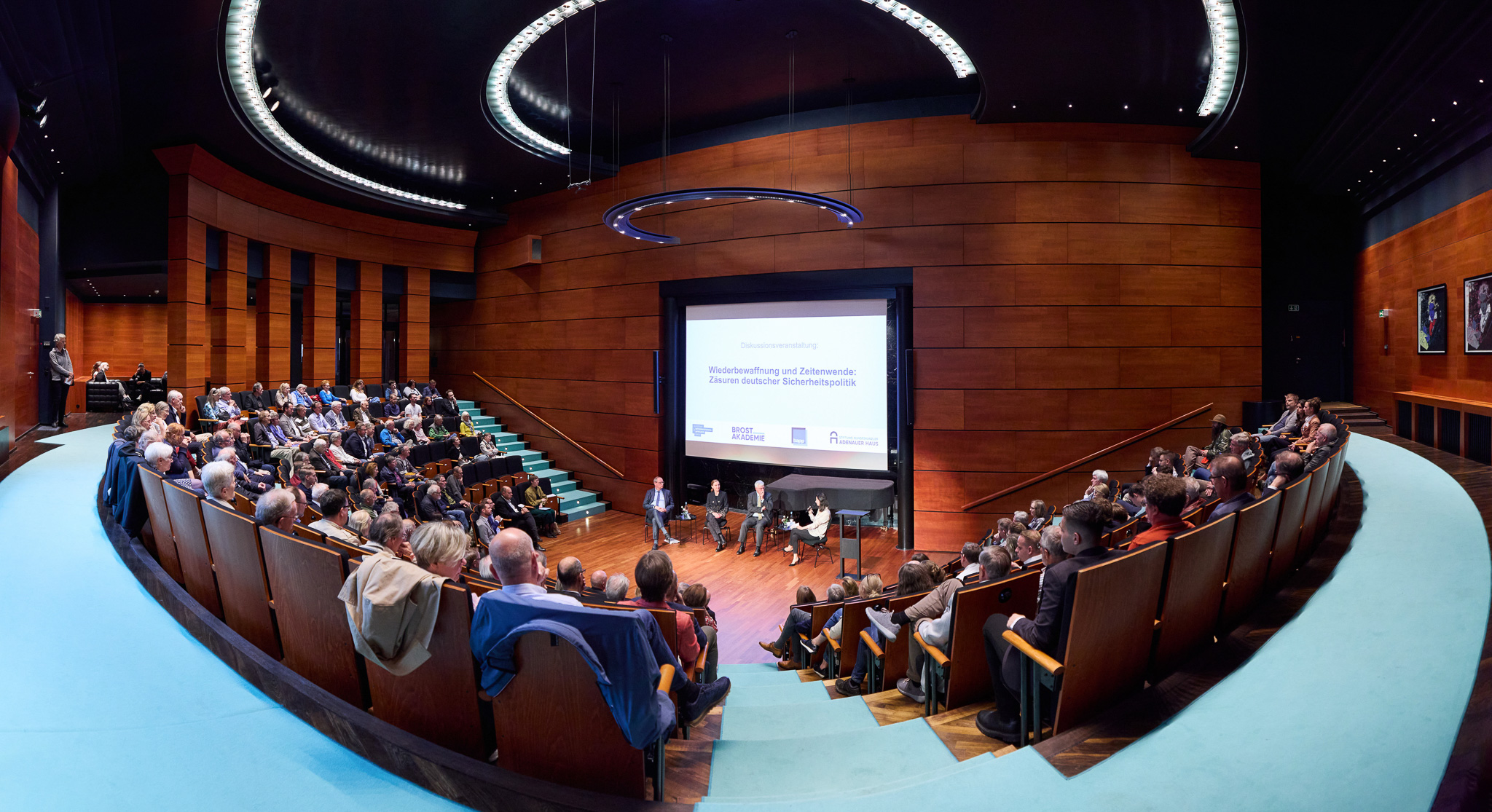
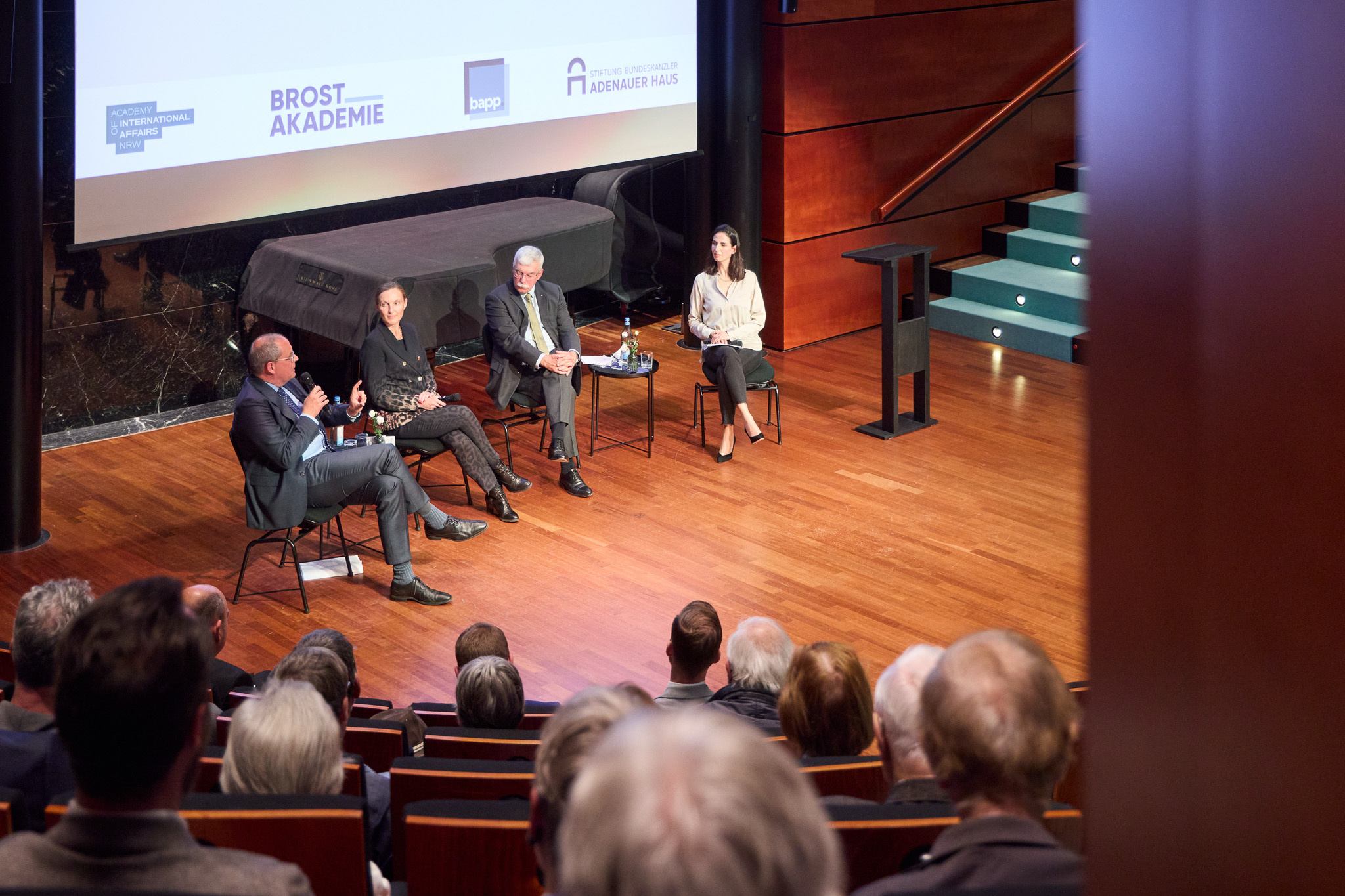
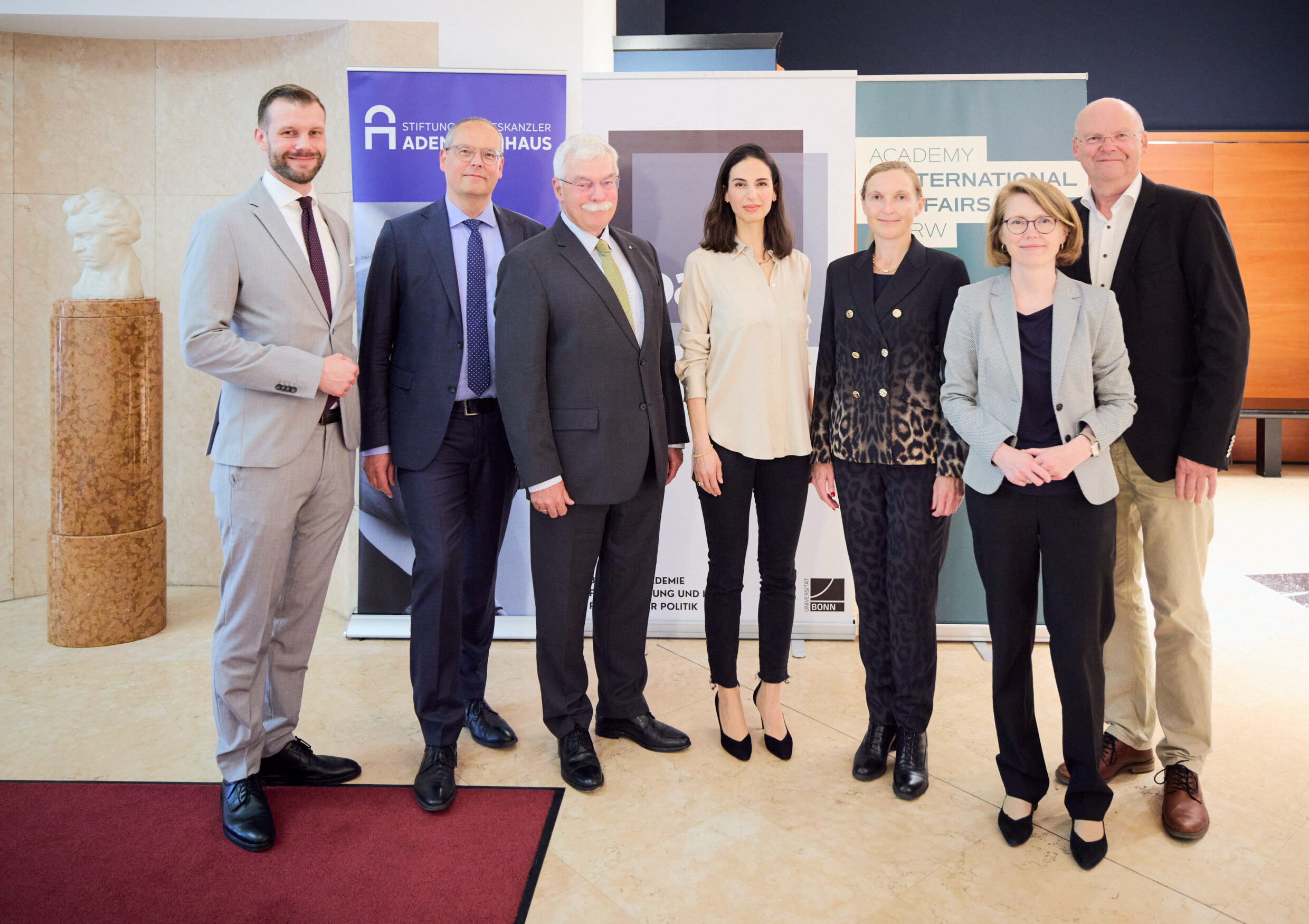
As part of a panel discussion organised by AIA NRW in collaboration with the der Bonner Akademie für Forschung und Lehre Praktischer Politik (BAPP) and the Stiftung Bundeskanzler-Adenauer-Haus, political scientist Prof. Dr Gerlinde Groitl, historian Prof. Dr Friedrich Kießling and retired General Jörg Vollmer discussed the ‘turning point’ in security policy and its historical and current significance for Germany. The event was moderated by AIA Director Dr Mayssoun Zein Al Din.
Prof. Groitl framed these developments not merely as a reaction to Russia’s war of aggression against Ukraine, but as part of a broader upheaval in the international order. The era of the European peace dividend is over; Germany and its partners must adapt to a world increasingly characterised by geopolitical competition and power politics. Retired General Vollmer emphasised the security policy implications of this development. Europe no longer finds itself in a stable peace order, but in a phase of strategic uncertainty. Hybrid threats, cyberattacks and Russia’s military aggression have made it clear that security can no longer be taken for granted. The Bundeswehr must therefore once again be consistently geared towards national and alliance defence. At the same time, higher defence spending alone was not enough; what was needed were effective structures, clear priorities and a societal understanding that defence was one of the state’s core responsibilities. Prof. Kießling placed the current debate in a historical context. He drew parallels between the current turning point and the rearmament of the Federal Republic in the 1950s under Konrad Adenauer. Adenauer had viewed military integration into the West not only as a security necessity, but as a prerequisite for sovereignty, political agency and the stabilisation of the young democracy. At the same time, Kießling recalled that rearmament had been highly controversial in society at the time. Similar debates regarding the scope, objectives and legitimacy of security policy measures can also be observed today.
In the ensuing discussion before an audience of about 170 interested participants, the focus was particularly on the lessons to be learnt from history and the future direction of German security policy. The panellists largely agreed that Germany had underestimated the threat situation following the end of the Cold War and had neglected its defence capabilities for many years. At the same time, it was emphasised that military strength must always be linked to democratic control, public debate and international cooperation. Questions regarding the role of the Bundeswehr in society and the relationship between national interests, European integration and the transatlantic partnership were also discussed at length. During the Q&A session, the audience picked up on these topics and questioned, in particular, the public acceptance of a long-term reorientation of security policy. The event made it clear that the turning point goes far beyond short-term reactions to current crises. It reflects a fundamental shift in the international landscape and presents Germany with the task of rebalancing its security policy, its self-image as a society and its international responsibilities.
Volker Lannert
Volker Lannert
Volker Lannert
Volker Lannert
Volker Lannert
Volker Lannert