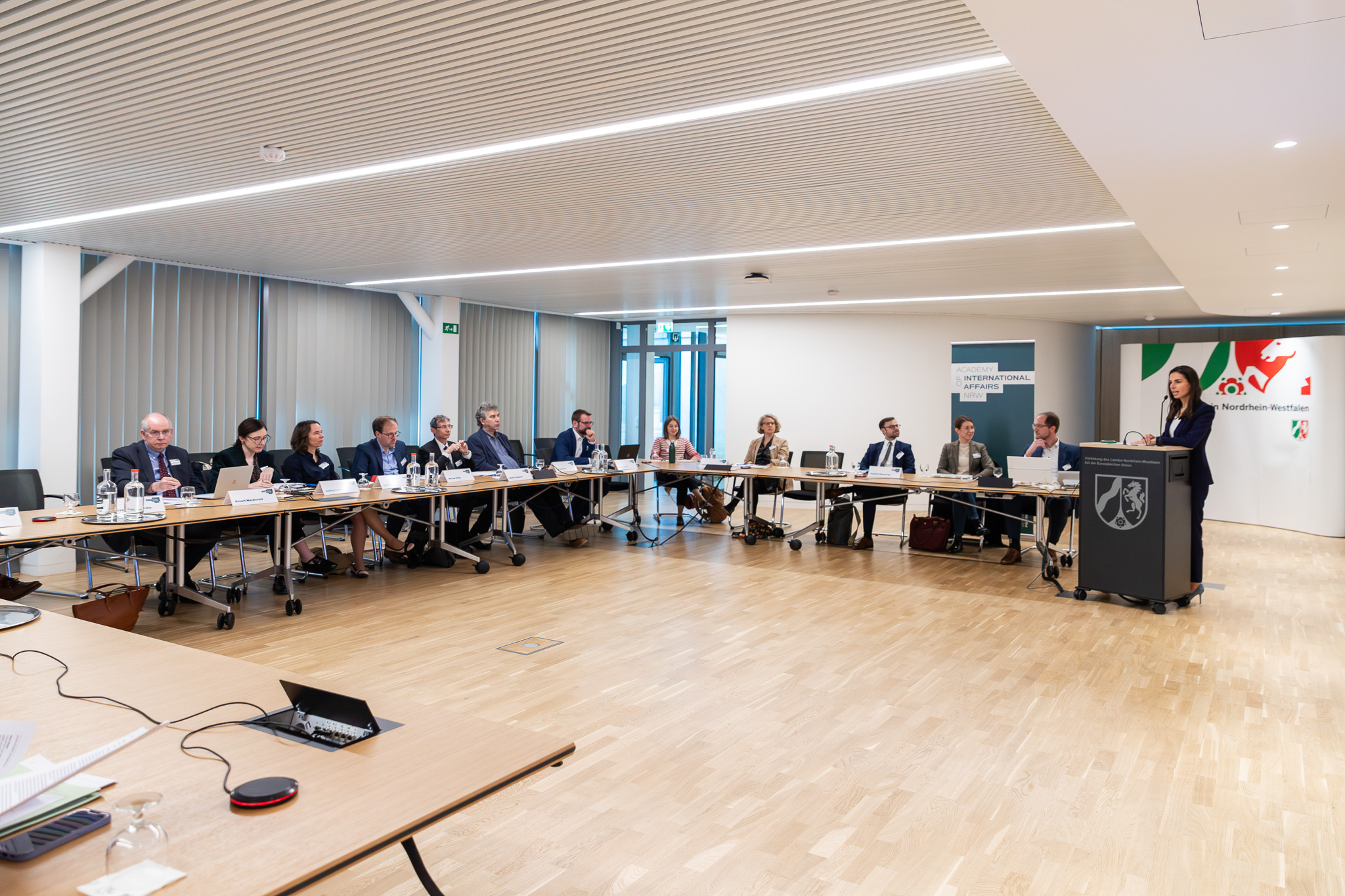
In cooperation with the North Rhine-Westphalia State Representation in Brussels, the AIA organized a workshop on the importance of European regions for the future of Europe’s soft power, initiated by AIA Fellow Stuart MacDonald. The regions are home to important players such as city networks, cultural institutions, universities, and innovation ecosystems, which have great appeal and whose potential is not yet fully exploited. Coordination between the various levels is often only ad hoc. The digital transformation of public diplomacy offers great opportunities here, but also brings with it new risks – not least against the backdrop of an increasingly confrontational global political climate.
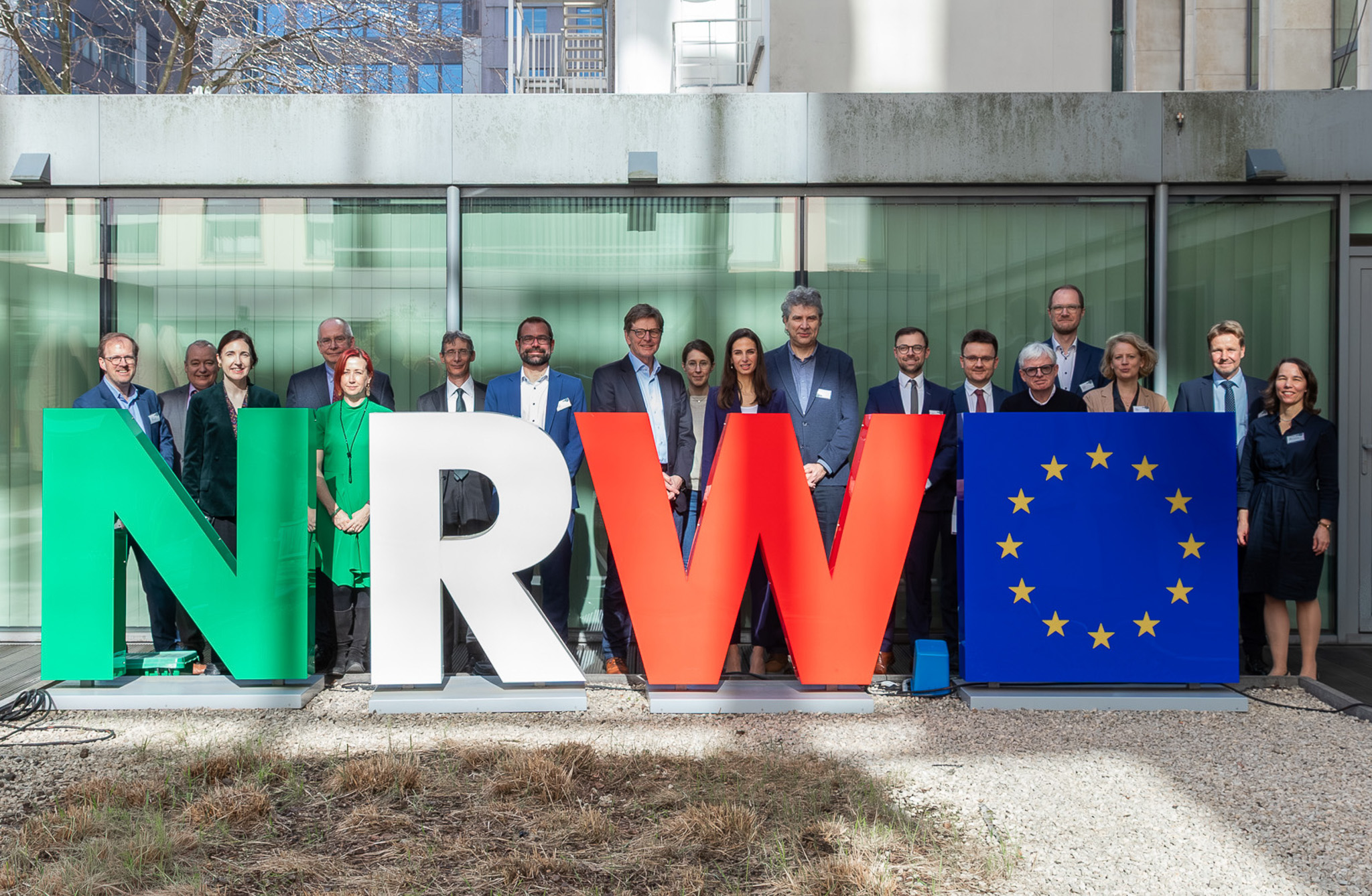
Against this backdrop, various stakeholders, institutions, researchers, and political decision-makers from North Rhine-Westphalia, EU institutions, and other European regions came together.
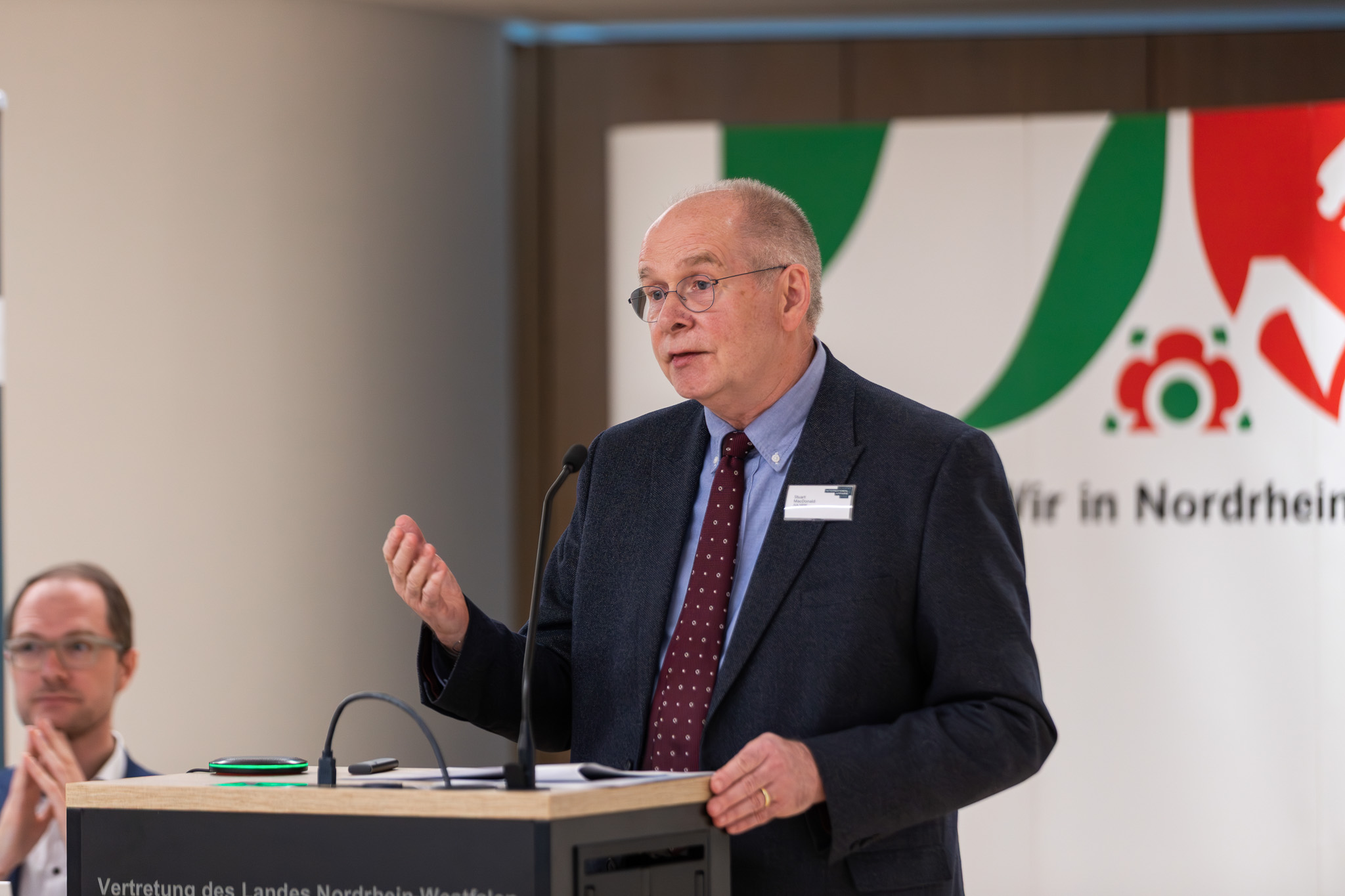
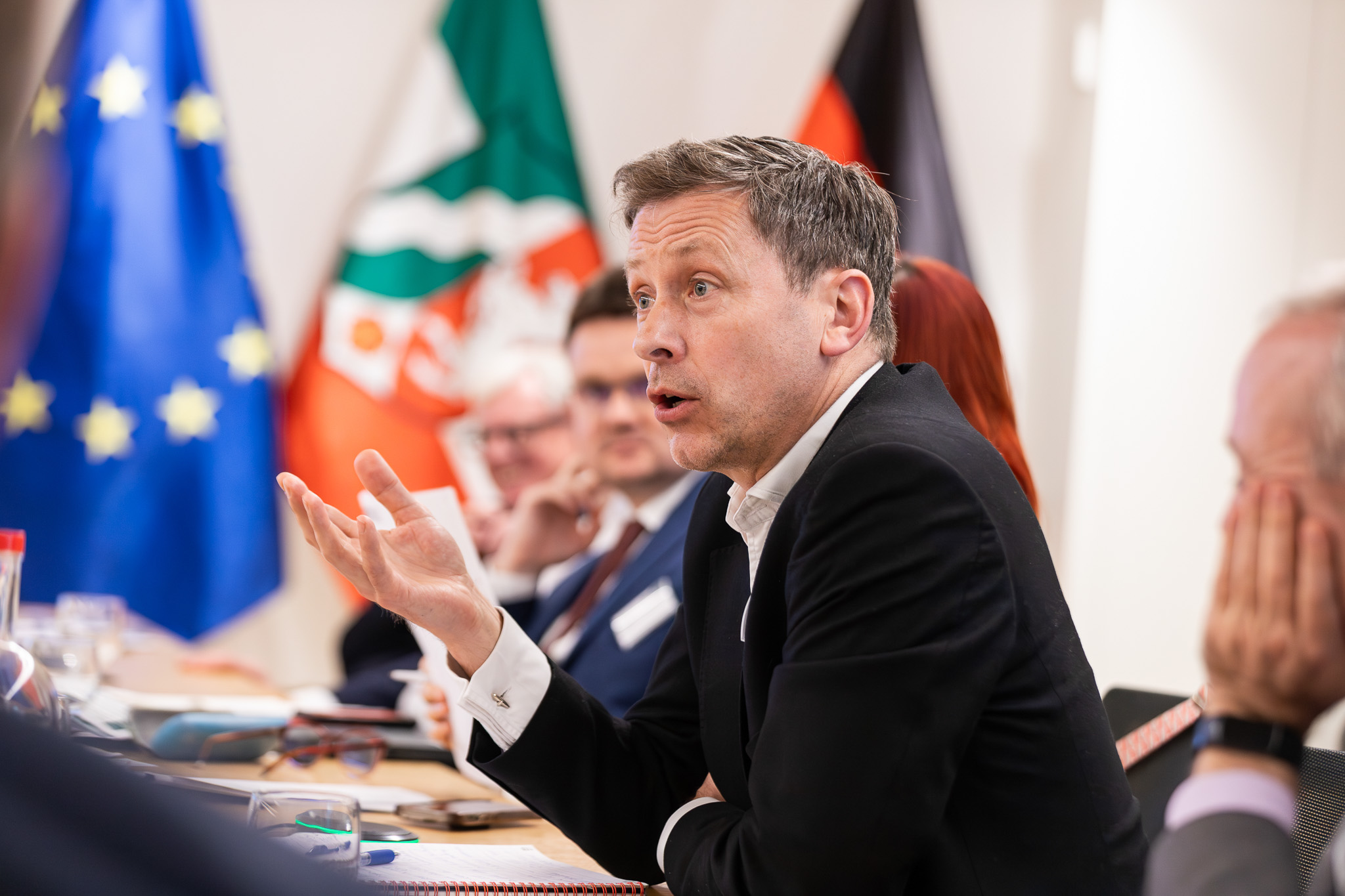
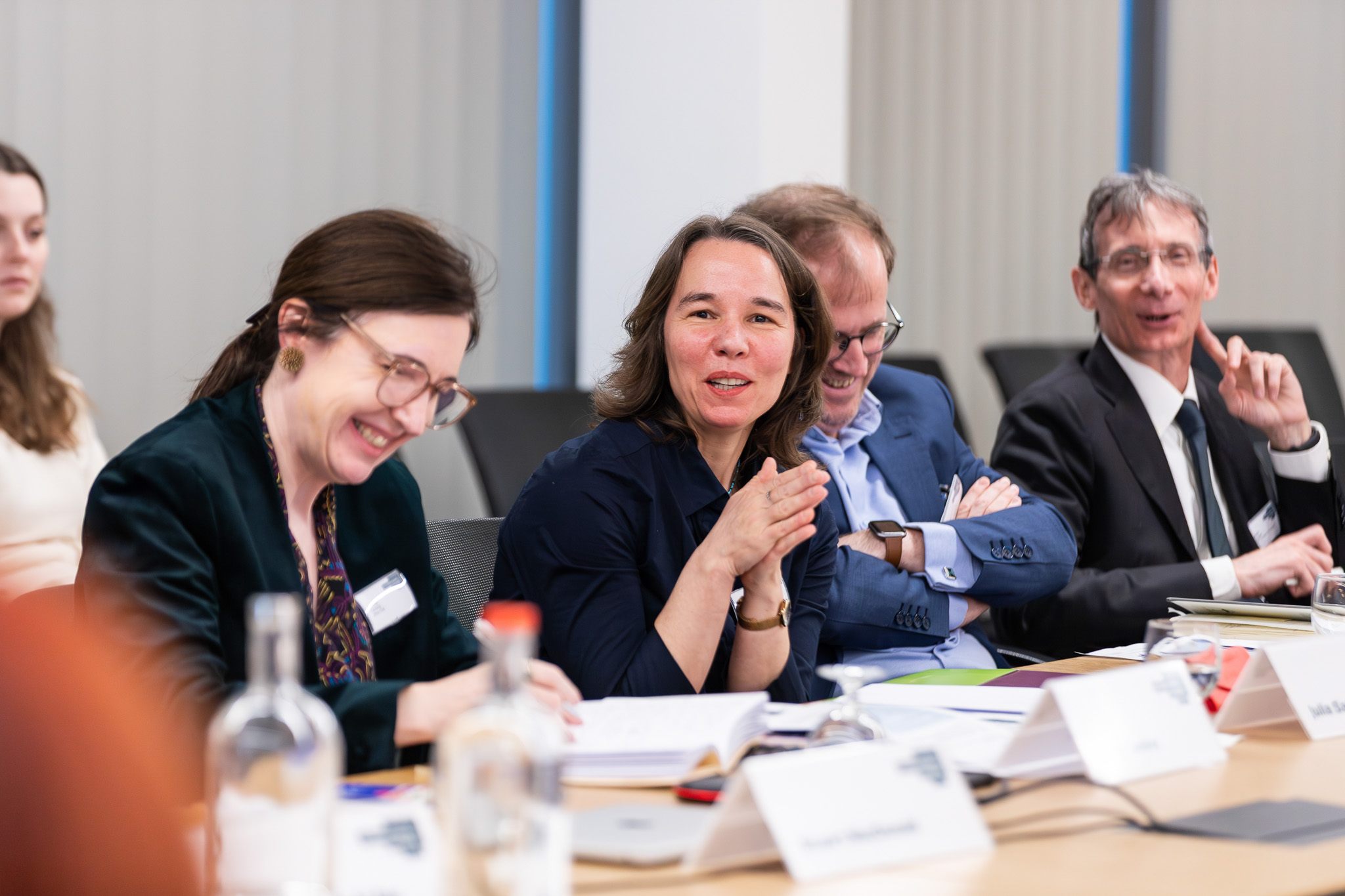
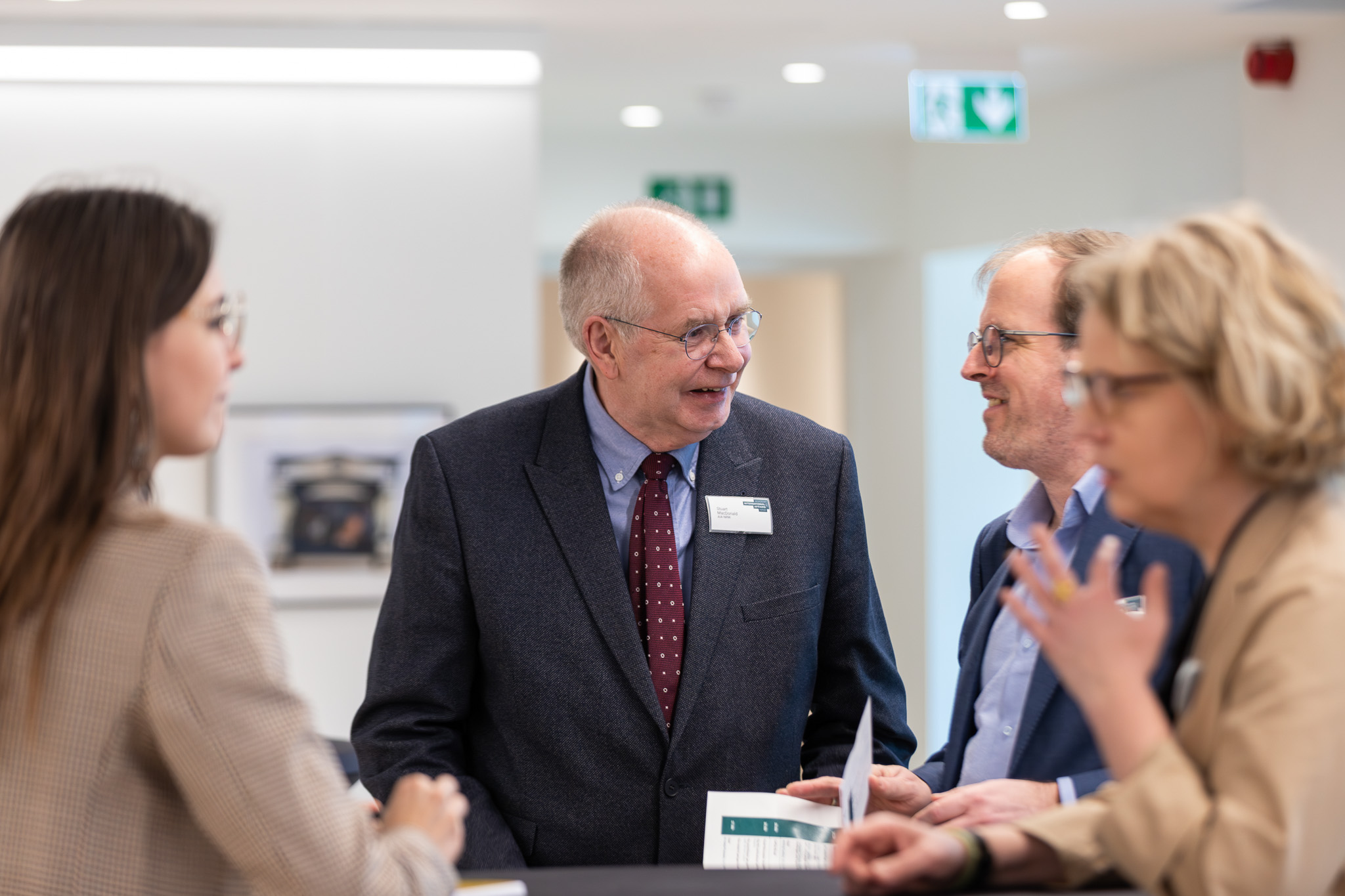
Stuart opened the workshop with an interesting observation from his studies: that Germany is the country with the greatest soft power among the 25 countries he examined. The first panel discussed the importance of regional soft power from different perspectives. Carolyn Rowe (Aston University) spoke about the specific strengths of the regions, Walter Zampieri (EACEA) and Michael Hörig (DAAD) discussed the connection between higher education and science diplomacy, Julia Sattler (Goethe-Institut, Brussels) contributed the perspective of national cultural institutes and independent institutions, and Corneliu Bjola (University of Oxford) warned of the dark sides of soft power associated with artificial intelligence.
The second panel then focused on ideas and proposals for a more coherent and effective EU approach. Bastien Revel from the European Committee of the Regions contributed the institutional perspective of the EU, Christine Wilson from the British Council presented the view of cultural institutes, before Hendrik Ohnesorge (University of Bonn) presented some key findings from his recently published study on soft power.
The discussions repeatedly emphasized the importance of soft power, but at the same time, practitioners from cultural and educational institutions in particular stressed that they do not use the term in their external communications, preferring to speak of cultural diplomacy or cultural education. Furthermore, it became clear on several occasions that soft power and hard power should not be viewed as two mutually exclusive concepts. Science diplomacy as a global public good is now also officially recognized and promoted by the European Commission. Several participants pointed out that the current revision of EU policy offers a temporary opportunity. Regional actors working through the Committee of the Regions and their representatives in Brussels can promote coordinated positions in order to achieve structured consultation rights. Last but not least, the renewed relations between the United Kingdom and the EU create further scope for joint research initiatives involving decentralized partners and universities from the United Kingdom. In particular, the initiative for a joint Horizon Project promoted by AIA Fellow Stuart MacDonald is to be continued after the workshop. A detailed synthesis of the results will be published shortly in an AIA Policy Brief.
Elza Löw
Elza Löw
Elza Löw
Elza Löw
Elza Löw
Elza Löw
Elza Löw
Elza Löw