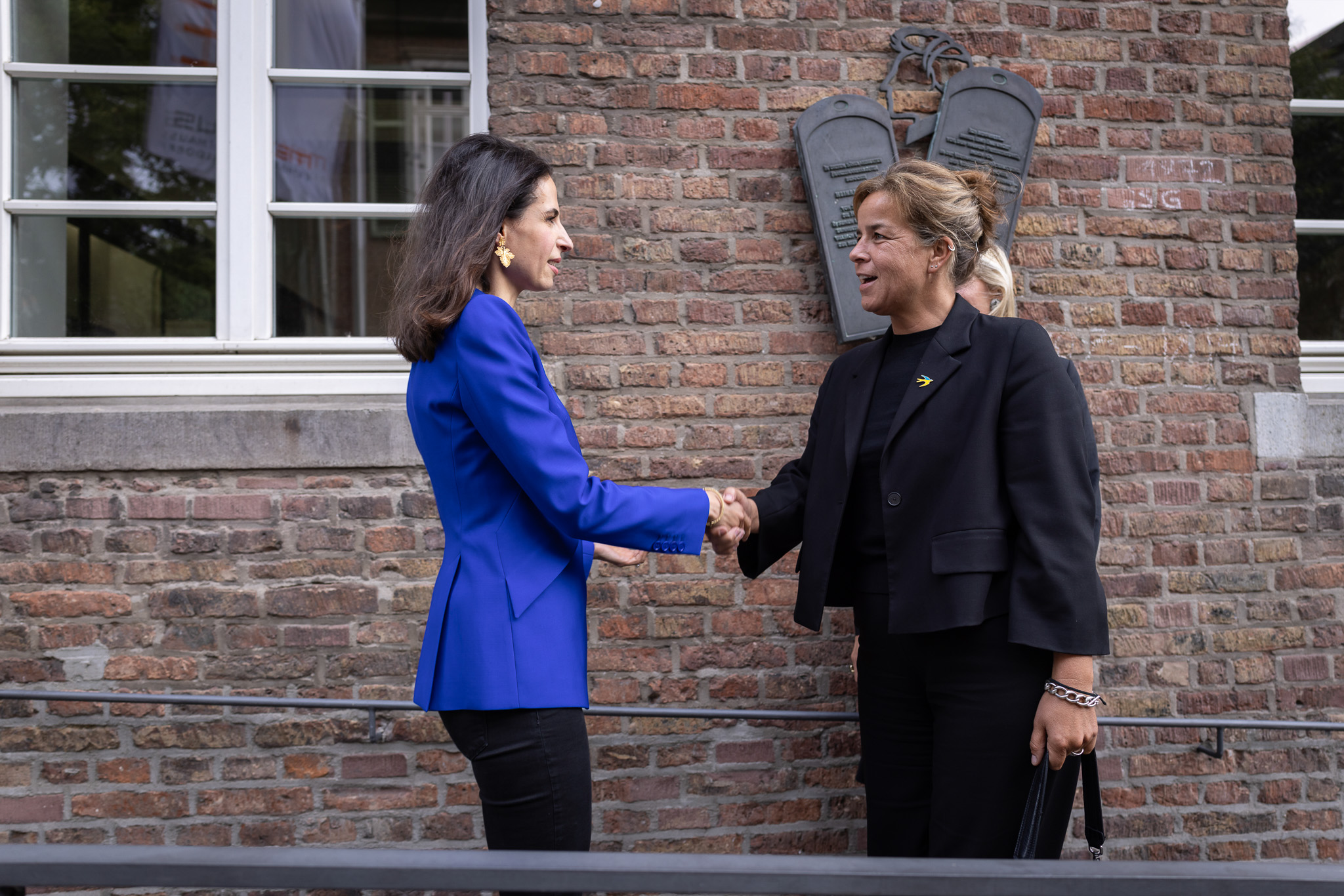
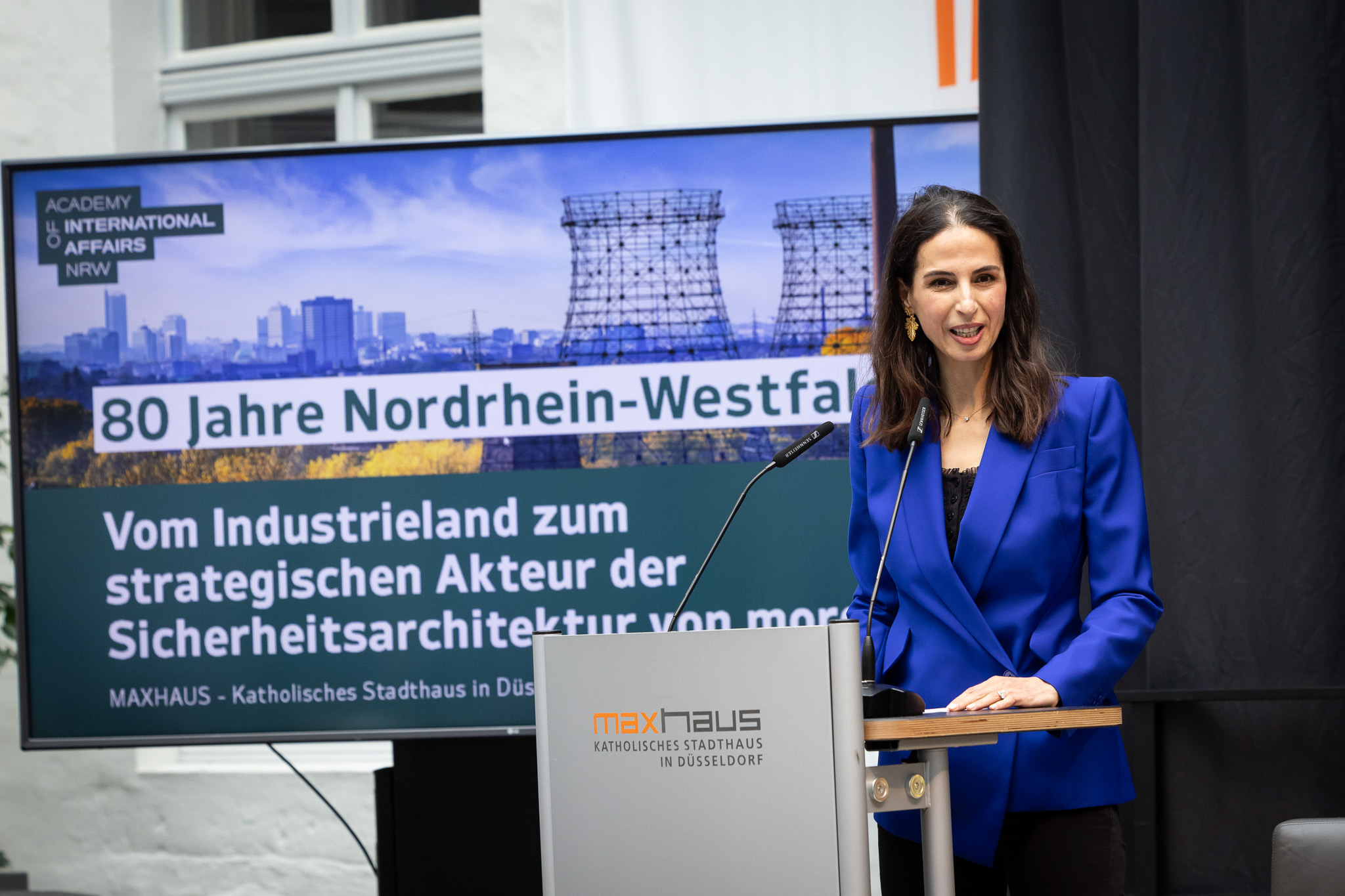
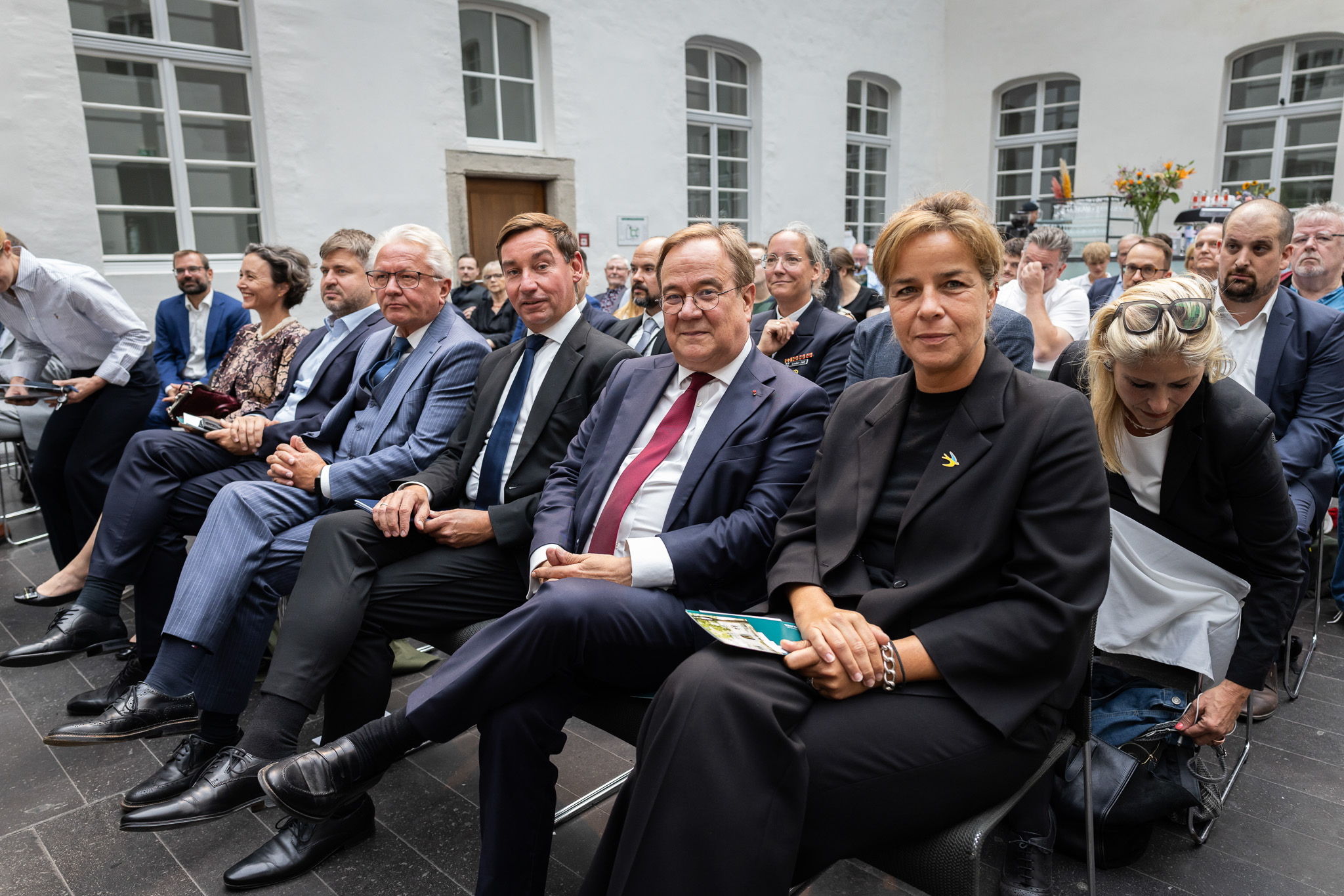
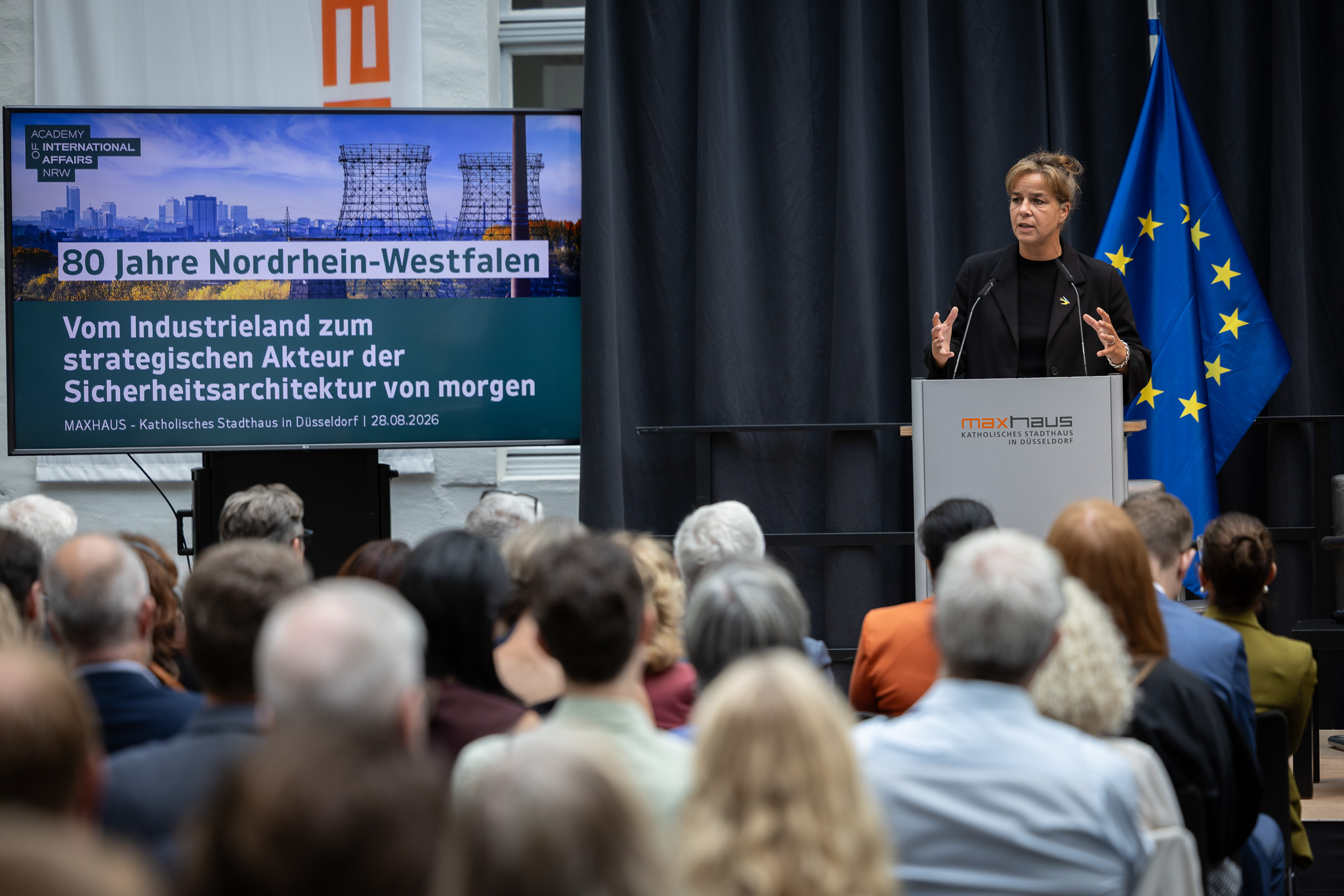
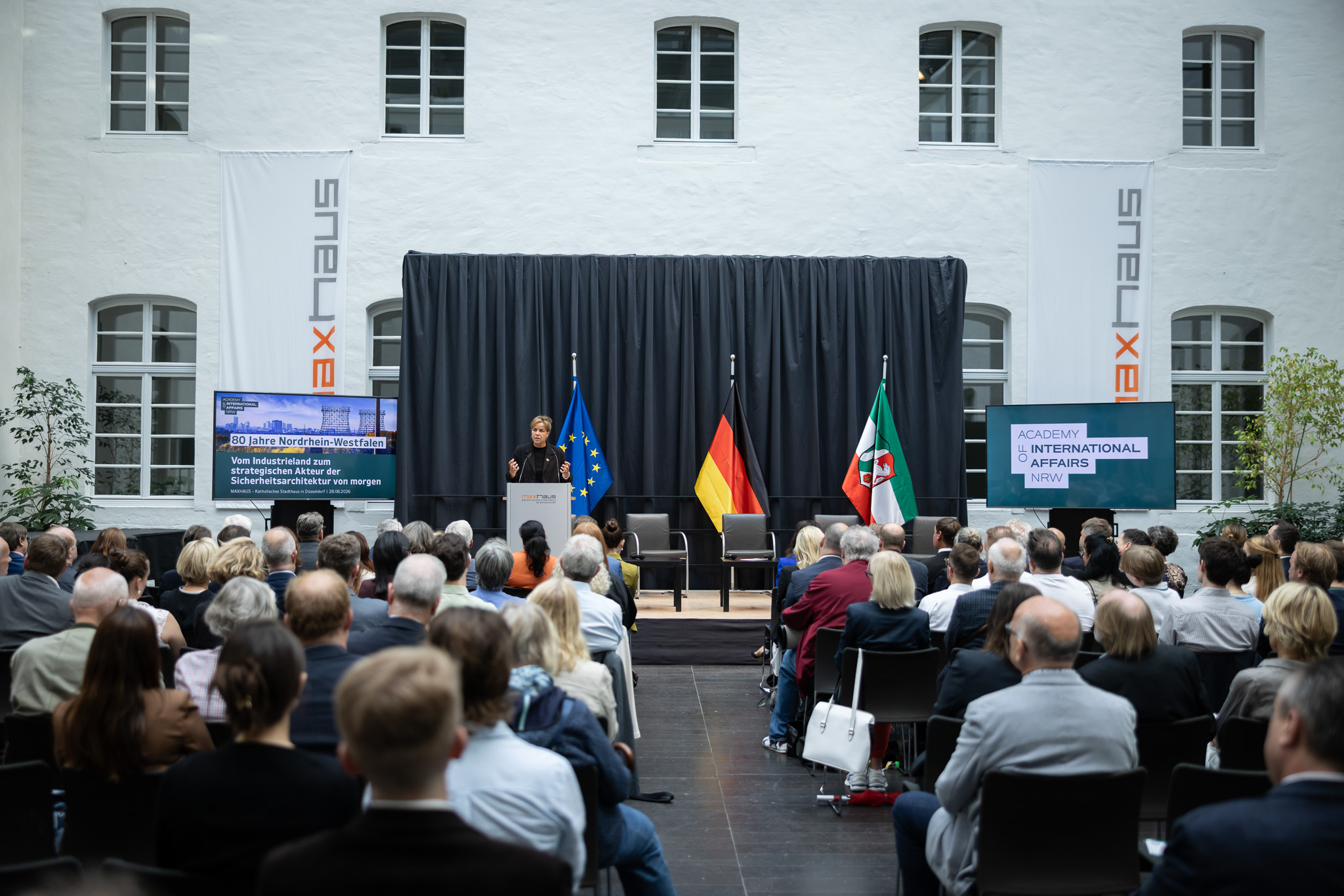
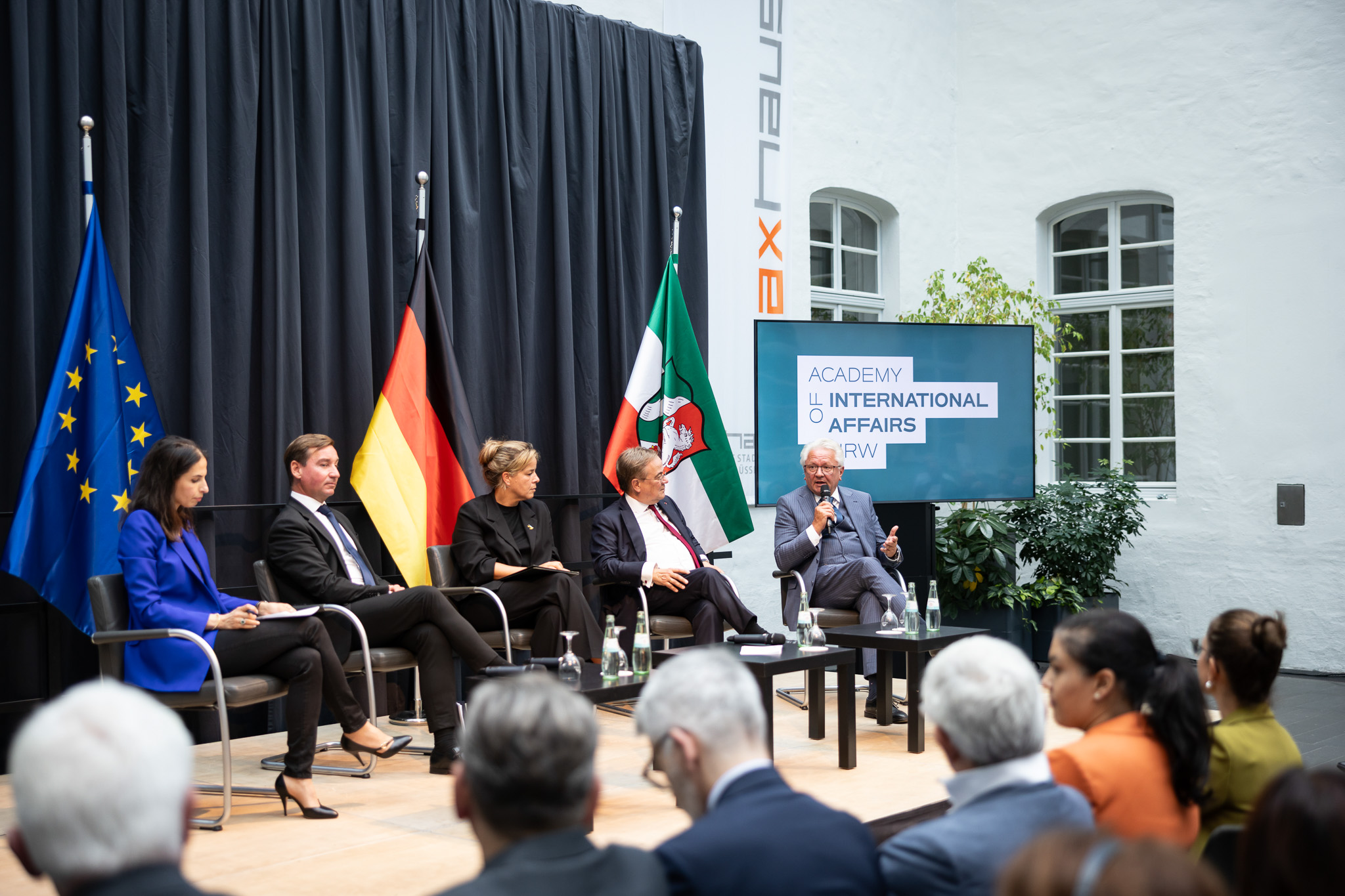
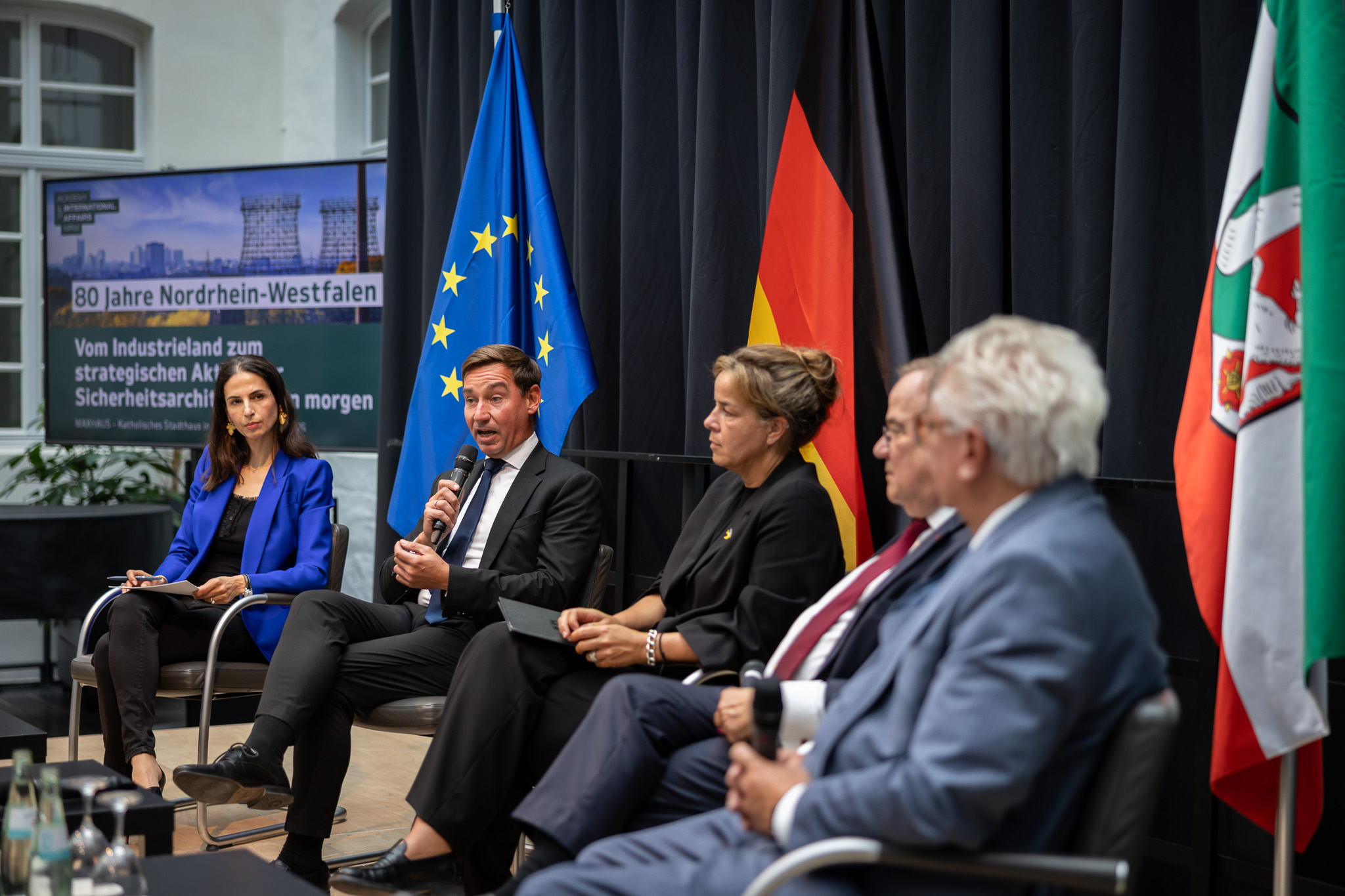
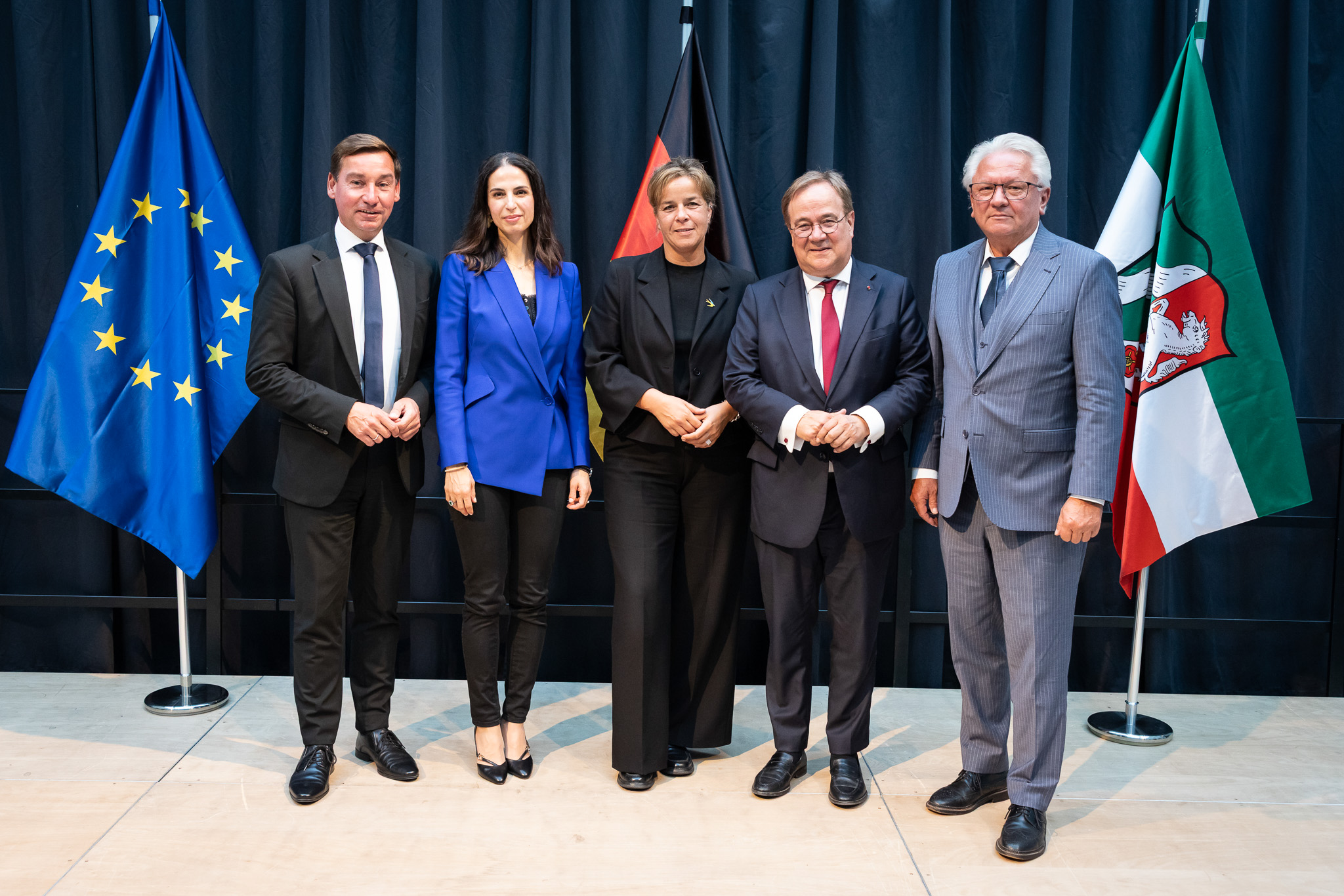
To mark the 80th anniversary of North Rhine-Westphalia, business leaders and North Rhine-Westphalia’s Minister of Economic Affairs Mona Neubaur, Parliamentary State Secretary at the Ministry of Defense Sebastian Hartmann, Chairman of the German Bundestag’s Foreign Affairs Committee Armin Laschet, and Armin Papperger, CEO of Rheinmetall, discussed the state’s future role in the European security architecture. The event, moderated by AIA NRW Director Mayssoun Zein Al Din, took place at the Maxhaus in Düsseldorf in front of over 200 guests.
The focus was on how North Rhine-Westphalia can leverage its industrial strength, technological expertise, and economic networks to enhance security and strategic sovereignty. It became clear that security is no longer limited to military capabilities alone, but also encompasses resilient supply chains, critical infrastructure, technological sovereignty, and, not least, societal resilience. With approximately 22 percent of Germany’s GDP, a strong mechanical engineering and chemical industry, and numerous internationally active companies, North Rhine-Westphalia (NRW) possesses a unique industrial base. At the same time, the state faces significant challenges: a sharp decline in industrial production, reluctance to invest, and substantial deficits in roads, bridges, and railways. A key focus of the discussion was on strengthening the integration between the federal government, the state, local governments, the business community, and military actors. Projects such as DEFENCE.NRW are also intended to tap into companies in the mechanical engineering, automotive, digitalization, and materials technology sectors for the security and defense industries.
The discussion made it clear that North Rhine-Westphalia can evolve from an industrial heartland into a strategic security hub—provided that infrastructure, innovation, industrial capacity, and the ability to take political action are consistently considered together.
Ralph Sondermann
Ralph Sondermann
Ralph Sondermann
Ralph Sondermann
Ralph Sondermann
Ralph Sondermann
Ralph Sondermann
Ralph Sondermann