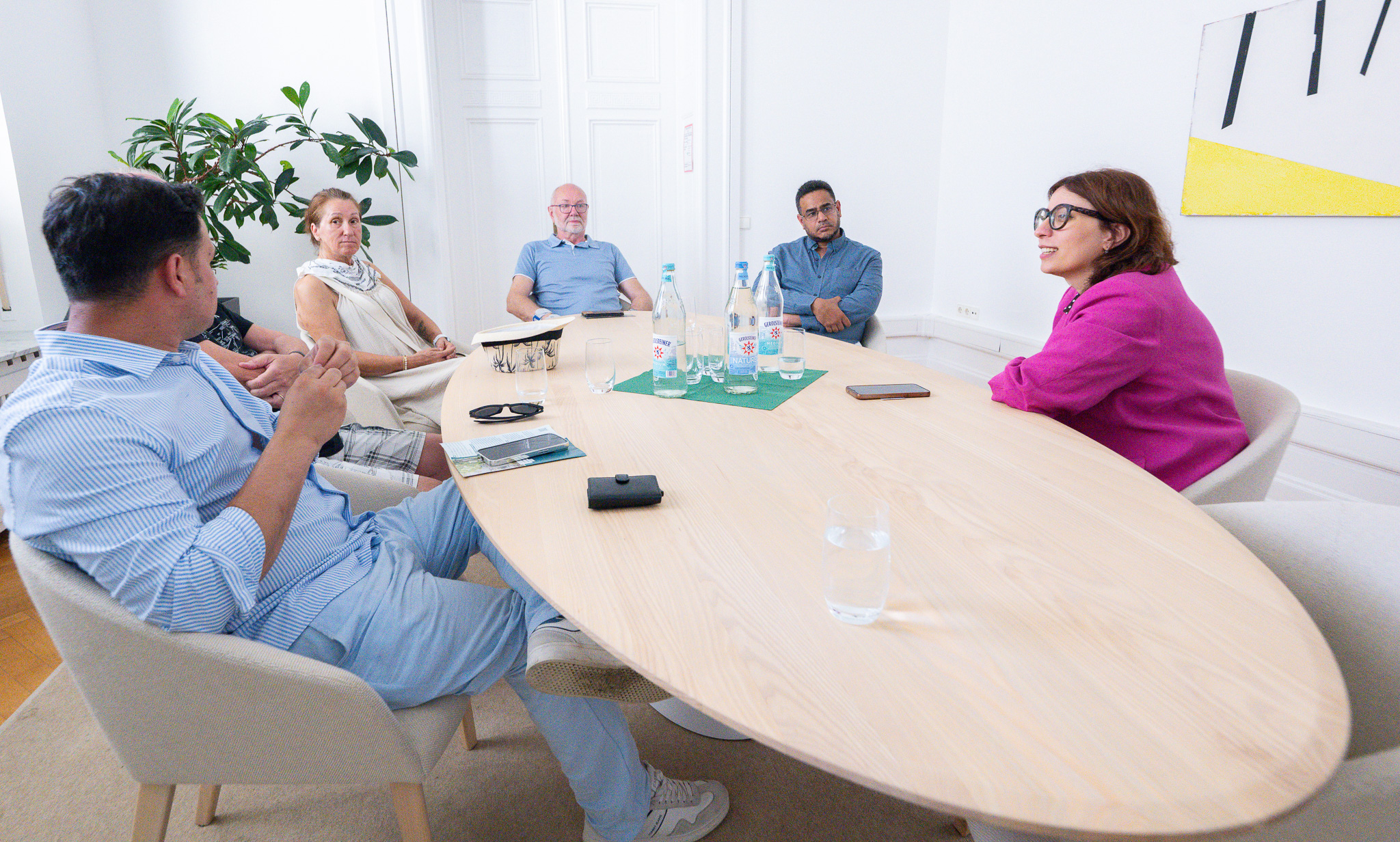
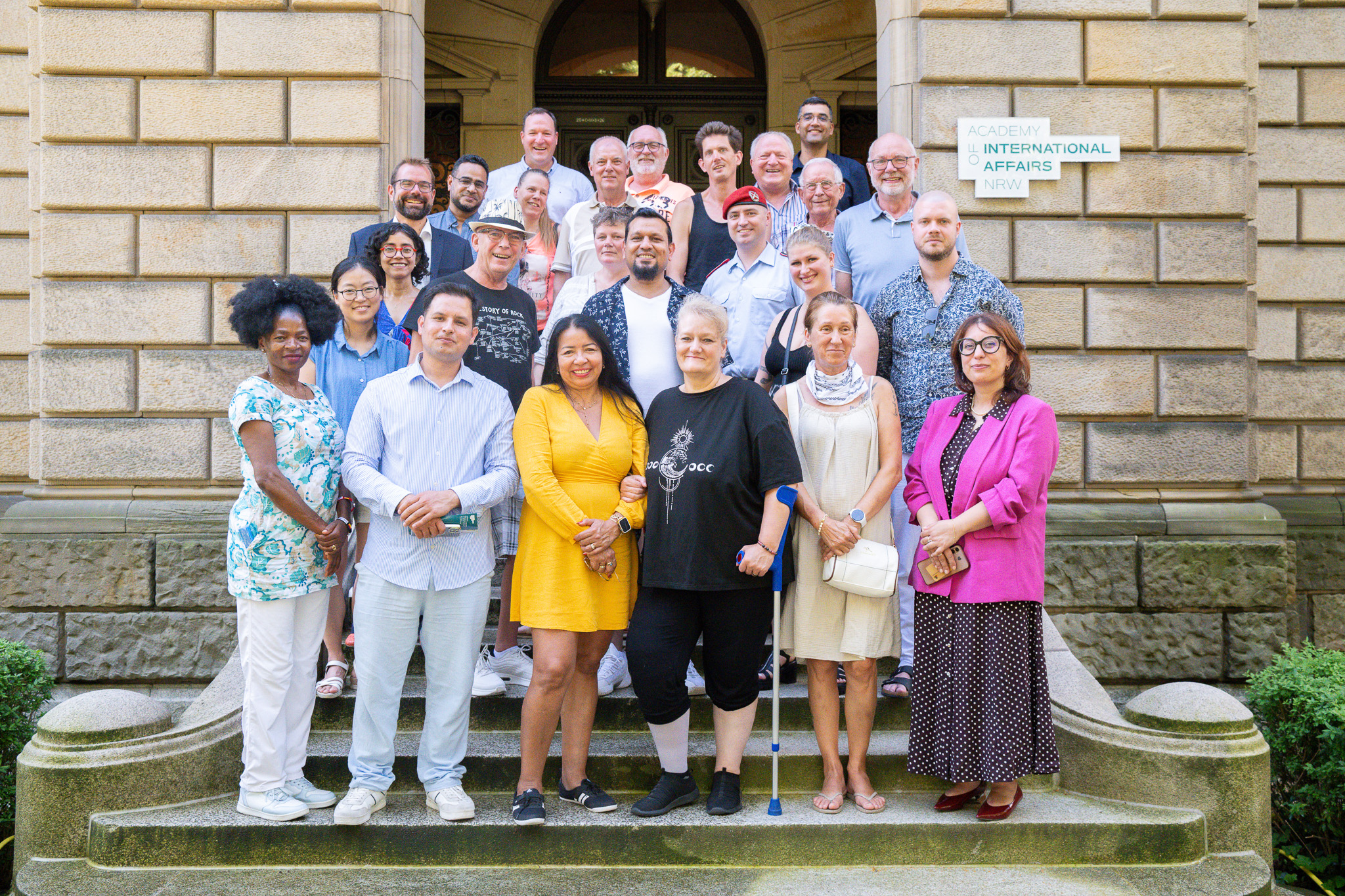
The academy was once again able to welcome a group of politically interested individuals from the Konrad Adenauer Foundation, Bonn office, for an exchange with the fellows. After a general introduction to the academy, the participants engaged in small group discussions on current global challenges. The basis for these discussions were the research projects of the fellows currently working at the academy, which offered different perspectives on issues of democracy, sustainability, technology, and global governance. One group focused on Ramya Vijaya’s presentation on national debt and fiscal sustainability. It became clear that many countries face the challenge of keeping their public finances stable while also providing sufficient resources for climate protection, social services, and infrastructure investment. The participants discussed in particular the question of how fiscal room for maneuver can be created without jeopardizing long-term development goals. Another working group analyzed the future of global ocean policy together with Christian Bueger. The focus was on the increasing economic use of the oceans, the impacts of climate change, and the difficulty of reconciling the different interests of environmental, security, and economic policies.
The discussion highlighted the growing importance of international cooperation for the protection and sustainable use of maritime areas. The group dealing with Yi Hyun Kang focused on the regulation of artificial intelligence and its environmental consequences. Participants discussed the rising energy and resource demands of modern AI systems, as well as the need to link technological innovations more closely with global sustainability goals. Filipe Mendonça’s research drew attention to the geopolitical consequences of technological rivalry between the U.S. and China. The strategies of Germany and Brazil for securing their economic and technological future in an increasingly competitive international environment were discussed. Finally, another group dealt with Zarina Burkadze’s analysis of great power politics in the South Caucasus. The focus was on the effects of Russia’s attack on Ukraine on democratization processes, as well as the question of how authoritarian and democratic models compete for political influence.
The event gave participants the opportunity to look at complex global developments from different academic perspectives and to critically reflect on their significance for political decision-making.

Benjamin Westhoff

Benjamin Westhoff

Benjamin Westhoff

Benjamin Westhoff
Benjamin Westhoff

Benjamin Westhoff
Benjamin Westhoff