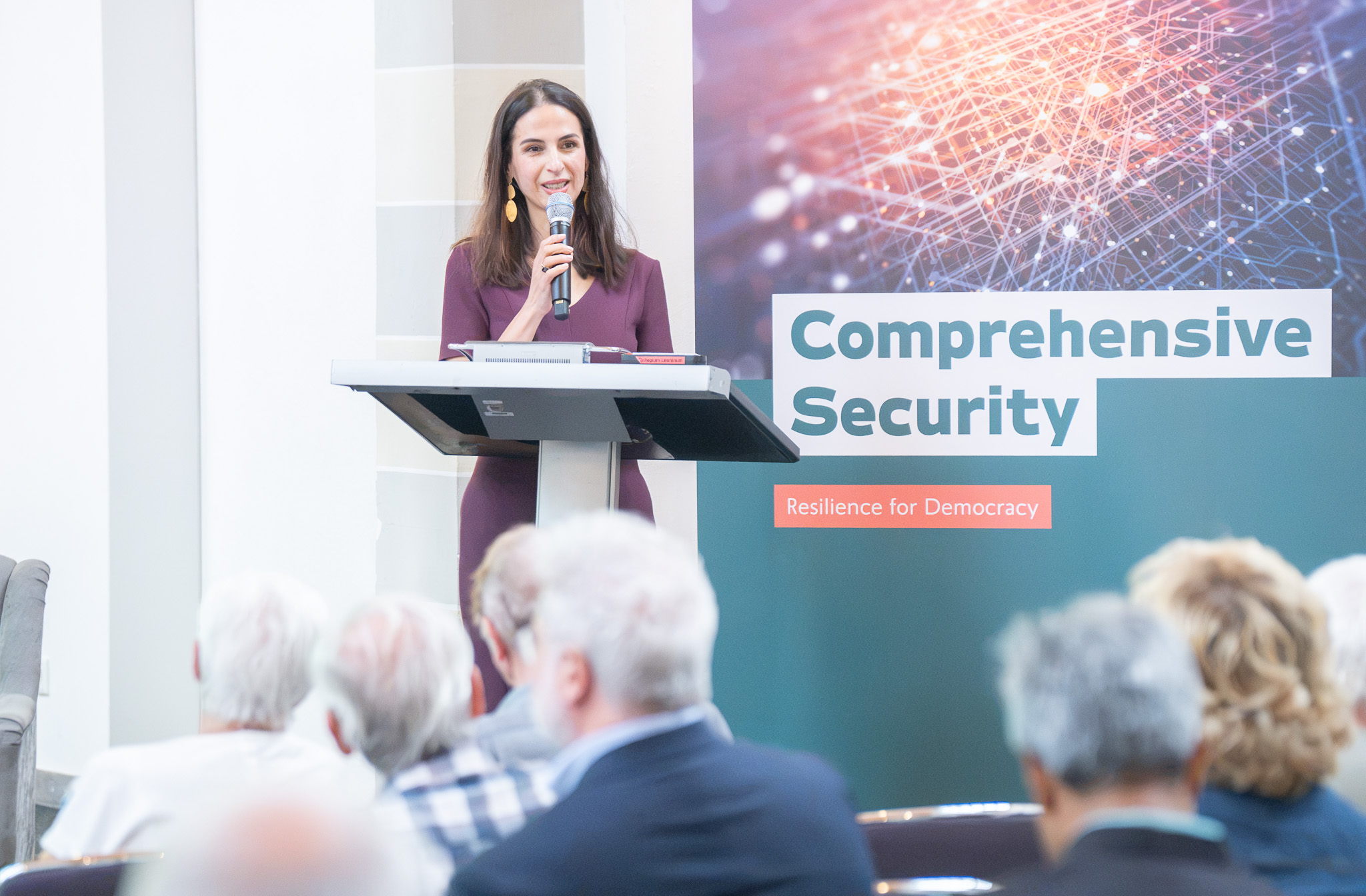
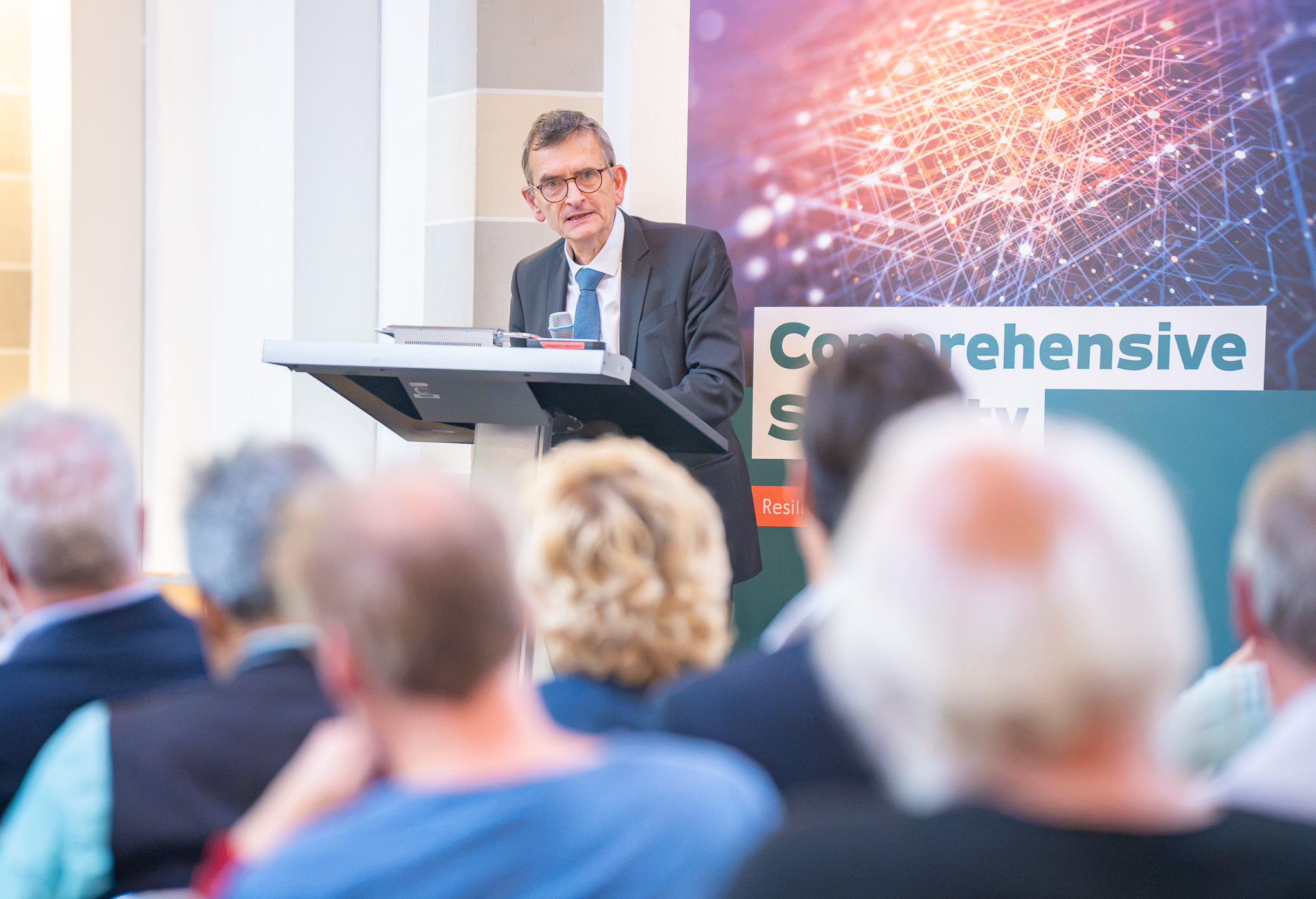
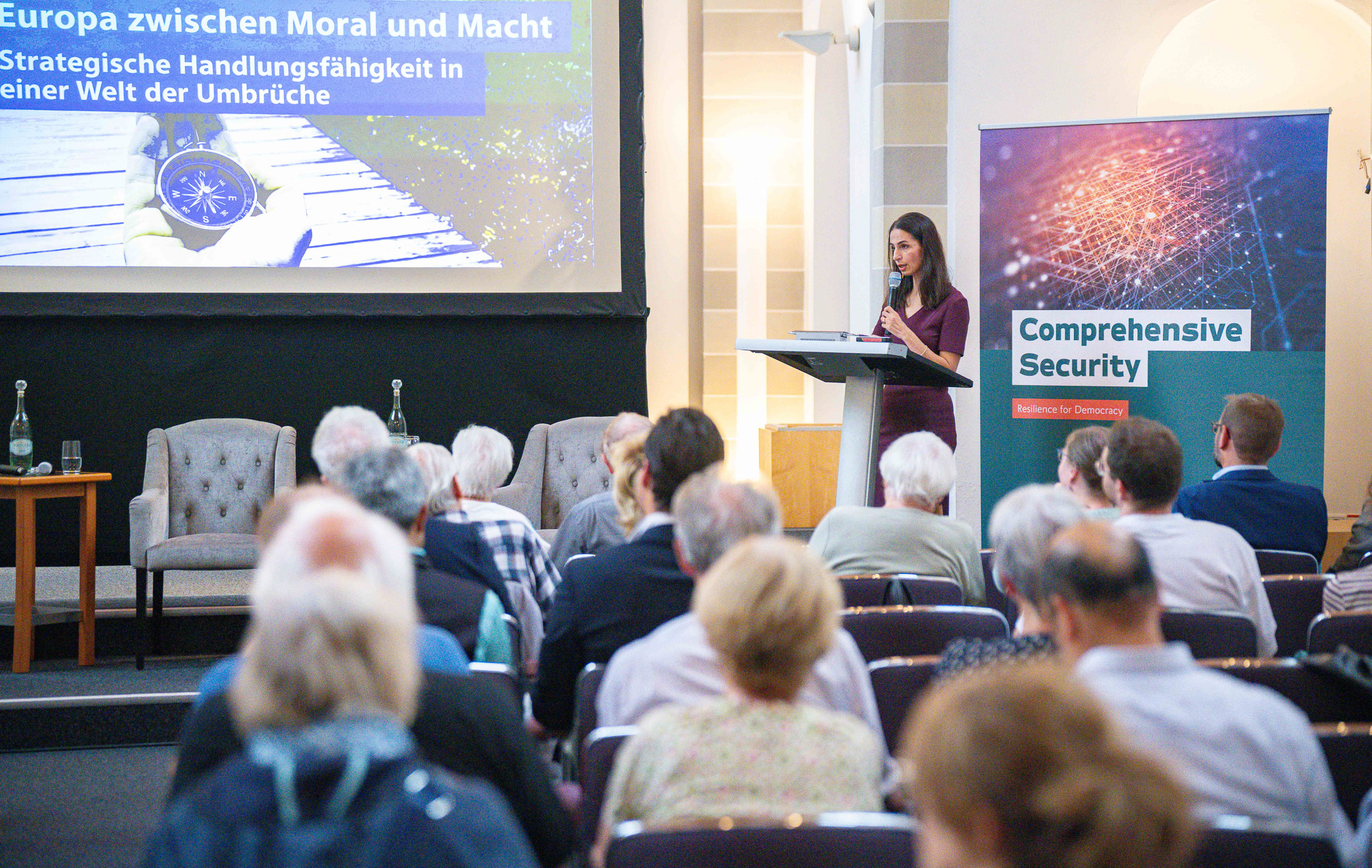
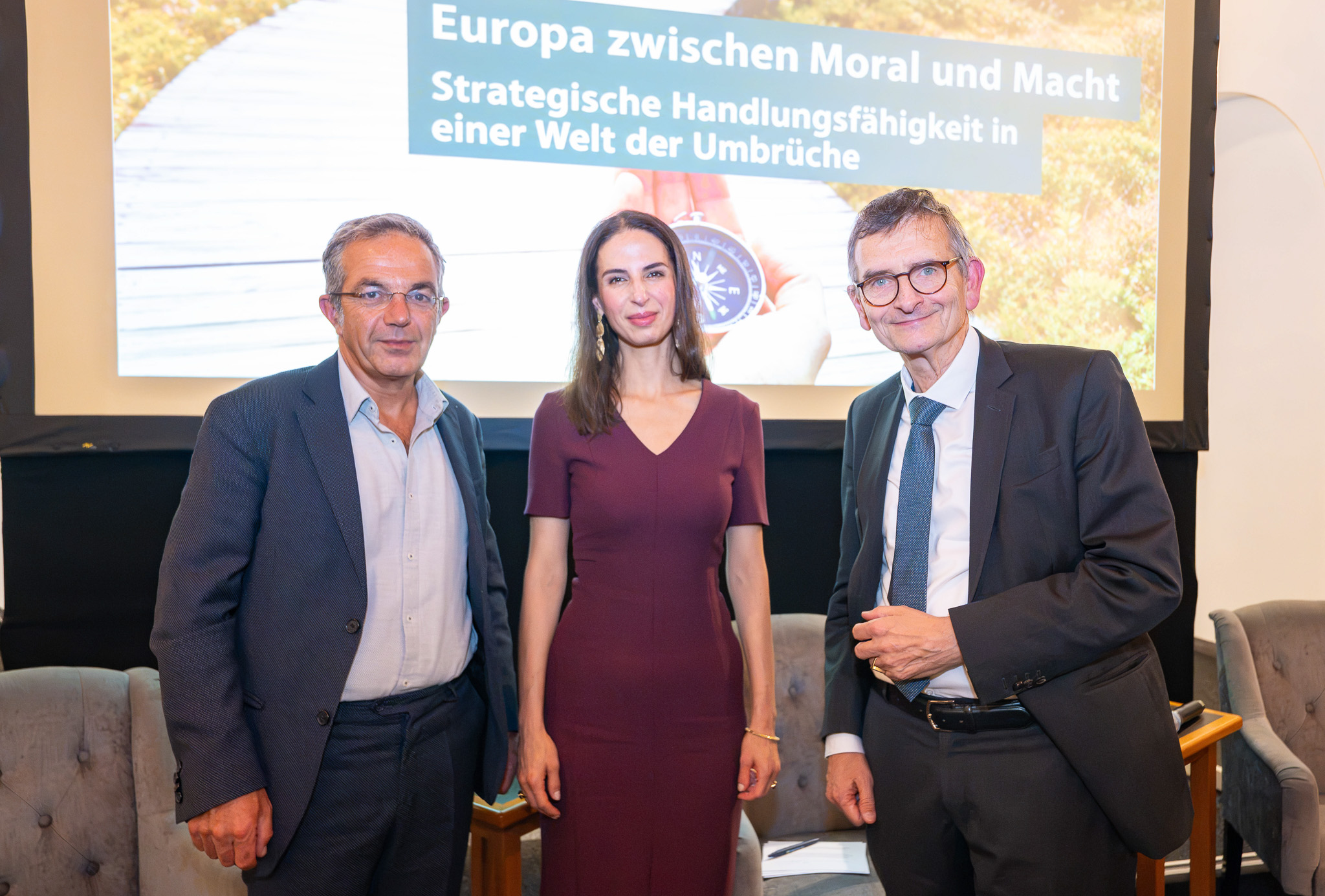
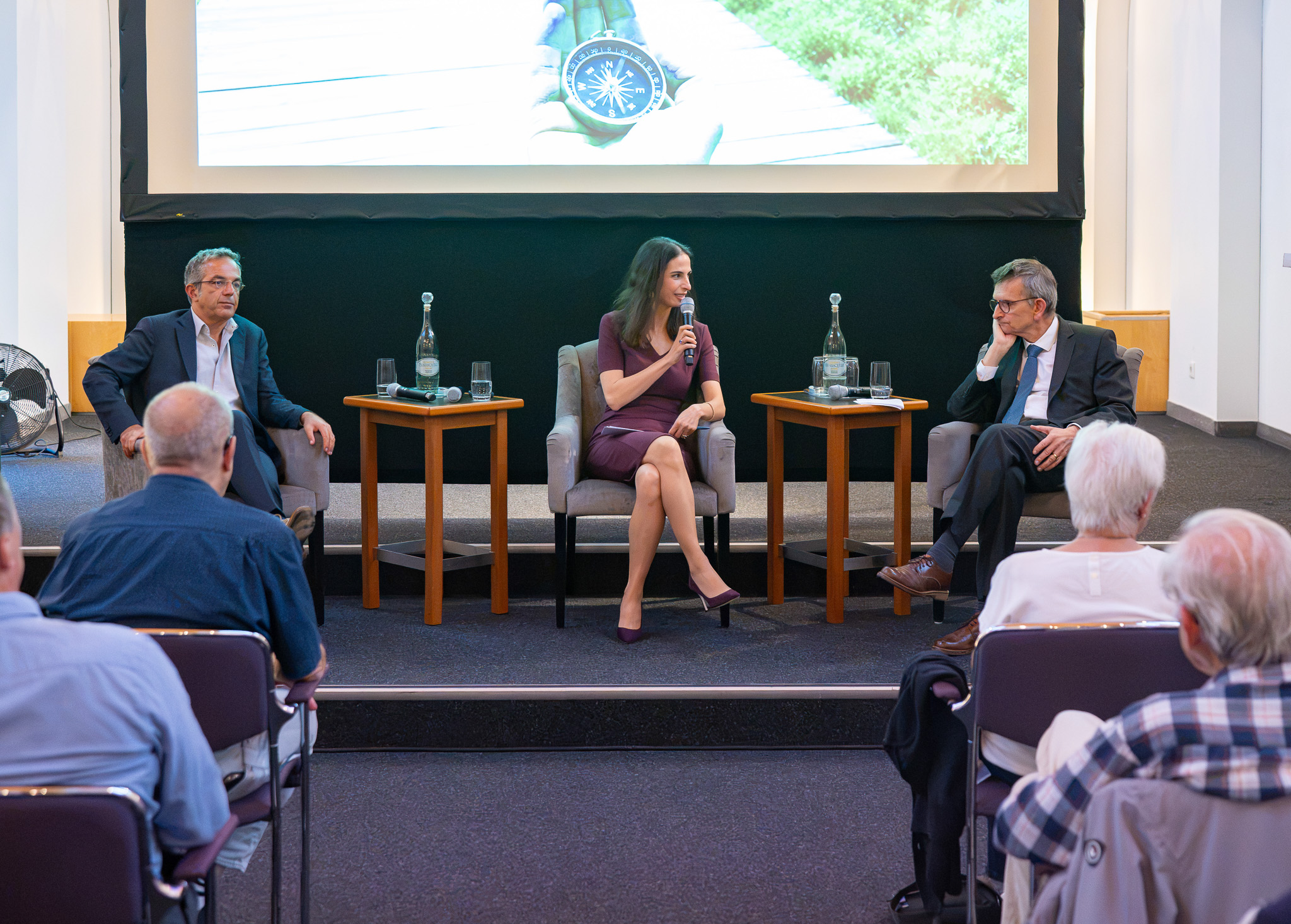
How can Europe remain capable of acting in a world of growing geopolitical tensions without compromising its political and ethical principles? This key question was the focus of the panel discussion that opened the symposium marking the fifth anniversary of the Academy of International Affairs NRW. In front of an audience of nearly 100 people, moderated by AIA Director Mayssoun Zein Al Din, the debate featured writer and journalist Navid Kermani and the long-standing Director of the German Institute for International and Security Affairs (SWP), as well as the former UN Special Envoy for Syria and Head of the UN Mission UNITAMS in Sudan.
Whilst the discussion repeatedly focused on the importance of values, responsibility and moral standards, it also addressed the need to effectively represent European interests in a world increasingly shaped by power politics. Both speakers spoke of the need to avoid declaring the end of international law too hastily. Following up on his speech to Bundeswehr recruits on July 20, Navid Kermani once again reflected on the virtue of saying “no.” Volker Perthes agreed, but added that when saying “no,” it is important to also point out alternatives. Both agreed that, in a multipolar world, Germany can only exert influence in global politics within the European context. Against the backdrop of the tension between normative aspirations and strategic interests, this raised the fundamental question of how Europe can define its role in a changing world order. War, geopolitical rivalries, the crisis in the international order and the emergence of new centres of power are calling previous certainties into question.
The panellists agreed that the capacity for strategic action extends far beyond traditional security and defence policy. Trade and technology policy, digital sovereignty, and foreign and development policy are also crucial components of a comprehensive European security strategy. It was emphasised – despite all differences – that strategic capacity to act must not be solely a matter of military strength. Rather, a comprehensive understanding of security is required, one that brings together political, economic, technological and societal dimensions. During a brief digression, the two panelists also shared their experiences regarding the situation in Sudan.