
AIA NRW, Katja Velmans
Fellows
-

 MediationPeace StudiesSecurity Studies
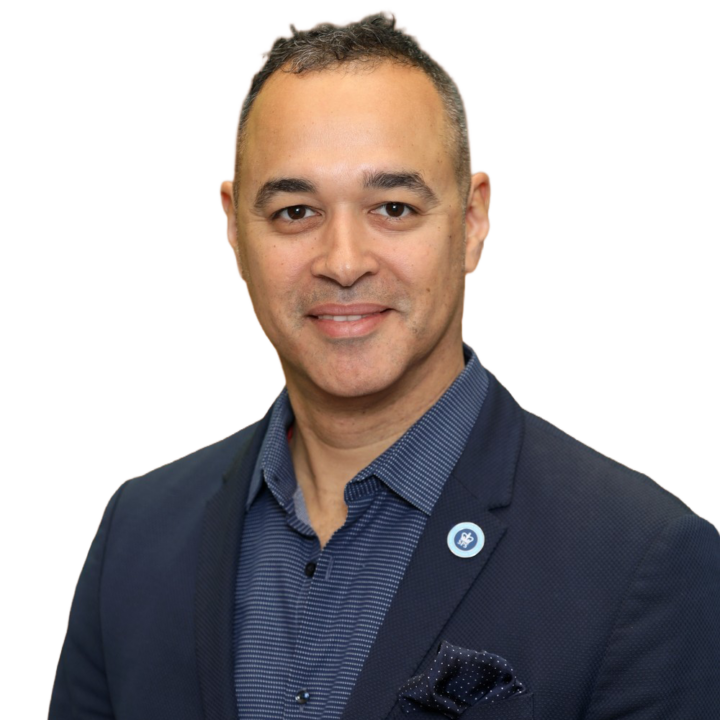
José Pascal da Rocha
Bridging the Gulf: Small-State Mediation, Structural Shifts, and Implications for German Foreign Policy
To profile
Qatar, Türkiye, Saudi Arabia and the UAE are becoming increasingly influential as mediators in international conflicts. The “Bridging the Gulf” project examines this shift, its motivations and different mediation approaches, and asks whether global peacemaking is becoming more multipolar. For Germany, this transformation presents both challenges and opportunities, requiring new partnerships with emerging mediation powers and greater coordination of diplomatic capabilities, particularly in conflicts where Europe is no longer the primary convener. -
 African PoliticsClimate Justice
Fadzai Chipato
Climate Justice and Finance in Africa
To profile
This project examines structural inequalities in global climate finance and how unmet commitments from developed countries affect trust and cooperation with Sub-Saharan Africa. Using policy analysis, case studies, and stakeholder interviews, it explores how climate finance systems can be restructured to promote equity, accountability, and stronger African participation in global climate governance. -
 Artifical IntelligenceDevelopment Economics
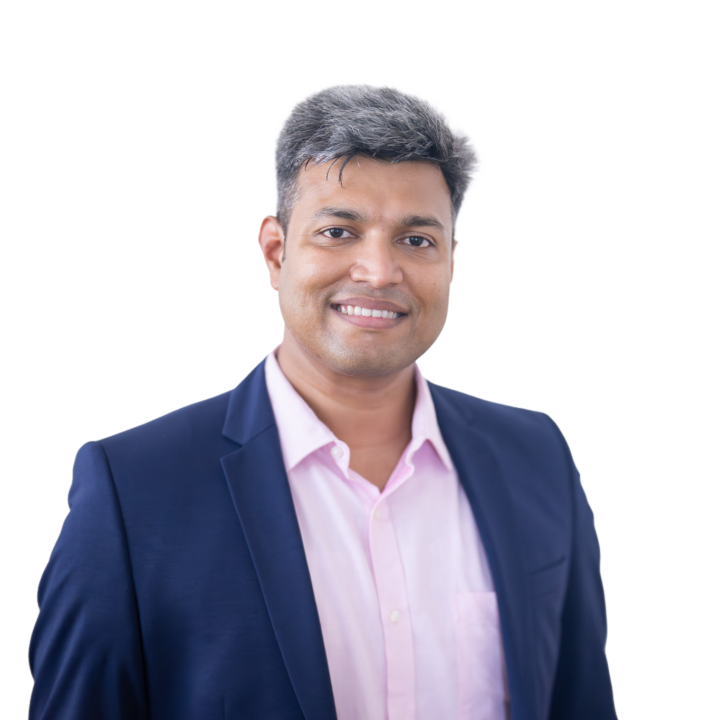
Tuhinsubhra Giri
Structural Transformation in the Age of Digitalisation and AI: Labour Market Shifts and the Politics of Inclusion
To profile
Digitalisation and AI are fundamentally reshaping global labour markets. While macroeconomic impacts are well-documented, the role of subnational actors-city governments, regional governments, and others- in mediating these shifts remains under-researched. This project investigates how digitalisation and AI influence labour structures and evaluates subnational policy responses to mitigate displacement and foster inclusion through adaptive skill-building and localised initiatives. -
 Comparative PoliticsInternational Relations
Zarina Burkadze
Great Power Politics and Democratization in the South Caucasus
To profile
The rise of global authoritarian powers such as China, Russia, and Iran has transformed the unipolar world order and undermined efforts to promote democracy worldwide. This research addresses how small states adjust to such major shifts and examines the impact these changes have on regime development? To what extent do economic and energy routes define conflicts and their dynamics? Additionally, how can the South Caucasus contribute to the economic and political security of the European Union? These research questions are explored using a mixed-methods design. -
 EconomicsAssociate Fellow
Ramya Vijaya
Debt Sustainability Versus Good Governance
To profile
My research is broadly on the interconnected crises of sovereign debt burdens, fiscal sustainability, and the need for fiscal space to address critical structural transformation challenges including the climate crisis, investments in vital social services, and development infrastructure. -
 International RelationsOcean Policies
Christian Bueger
Beyond the Oceanic Disconnect: Recalibrating Global Ocean Governance
To profile
The past decade has witnessed a historic re-evaluation of the oceans. How can global ocean governance adapt to unprecedented maritime industrialization, climate crisis, and institutional fragmentation while addressing competing security, economic, and environmental priorities? -
 International Relations
Cecile Pelaudeix
EU Energy Security and Structural Transformations: Greenland and Sweden Critical Raw Materials
To profile
EU policies to fight the existential threat of climate change, accelerate energy transition and ensure energy security can be met with fierce opposition captured by the phrase ‘not in my backyard’ or ‘green colonialism’. This project interrogates the political repercussions of critical material policies. The comparison of Sweden and Greenland assesses the conditions under which the implementation of EU policies is conducive to acceptance or is associated with resistance and political shift. -
 Artificial IntelligenceComparative PoliticsEnvironmental PoliticsSustainable DevelopmentAssociate Fellow
Yi hyun Kang
Governing AI and the Environment
To profile
This project addresses the urgent challenge of integrating global AI governance with environmental sustainability goals. As AI technologies rapidly expand, their environmental footprint raises concern. Yet, current global governance systems for AI and the environment remain fragmented. This project explores viable pathways for institutional interplay between AI governance frameworks and international environmental reg -
 Artificial IntelligenceDigital GovernanceAssociate Fellow
Anthony Acquah
Ethical Tech Diplomacy in Germany-Africa Relations
To profile
As artificial intelligence (AI) becomes the cornerstone in global development, the ethical dogma of its deployment, especially in continents with emergent technological infrastructure such as Africa require urgent attention. This project seeks to explore Germany’s leadership role in advancing ethical AI standards in Africa, situating this endeavor within a broader model of ethical tech diplomacy. -
 Global DevelopmentHuman RightsPostcolonialismAssociate Fellow
Heloise Weber
Politics of the ‘Declaration on the Right to Development’
To profile
My project examines the politics and political economy implications of a key international development and human rights framework: the 1986 United Nations Declaration on the Right to Development (RtD). More recently the Rtd has been aligned with the United Nations 2030 Sustainable Development Goals (SDG) agenda, conceived as a central pillar for ‘implementation’ of the RtD. I examine the RtD in relation to (global) structural injustice. -
 Political EconomyAssociate Fellow
Filipe Mendonça
Competing for the Future
To profile
The US-China technological rivalry reshapes the global political economy and the liberal order. This project examines how Brazil and Germany respond to this structural change. While Brazil seeks neo-industrialization to avoid reprimarization, Germany faces strategic autonomy dilemmas within the EU. The research investigates how regional powers pursue technological resilience and viability under increasing geopolitical constraints. -
 African PoliticsInternational RelationsSecurity StudiesAssociate Fellow
Aliru Abiodun Adiatu
External Development Partners and Regional Integration in SubSaharan Africa: A Case Analysis of the European Union and African Union Inter-Regional Relations
To profile
This research project analyses the dynamics of the EU- AU inter-regional relations with the intent to highlight the opportunities and challenges that arise from this partnership. It investigates how external development partners can contribute to advancing regional integration in Africa, while also bearing in mind the significance of the African ownership and leadership in shaping the continent’s development trajectory. -
 International RelationsSubnational DiplomacyAssociate Fellow
Débora Prado
A Comparative Analysis of the International Actions of Subnational Governments in Brazil and Germany
To profile
This project examines how regional governments in Brazil and Germany engage internationally and why their actions matter for global debates. It focuses on two key areas: the global COVID-19 pandemic and environmental diplomacy. The study explores how subnational actors build partnerships, influence policy, and expand their presence beyond national borders, highlighting the growing relevance of subnational diplomacy in International Relations. -
 International RelationsAssociate Fellow
Karolina Kluczewska
Geopolitical Reorientations in Central Asia
To profile
Since the Soviet collapse, Central Asian states have been largely oriented towards Russia, seeing it as a reference point in foreign and domestic policies. Russia was even attributed with a status of a “strategic partner”. This suddenly changed with Russia’s invasion of Ukraine in 2022 which prompted Central Asian policymakers, businesses and civil society to look for new, more reliable partners in Asia, Europe and the Middle East. Using a critical geopolitics lens, my project analyses the new “strategic” partnerships emerging in the region. It investigates actors and rationalities of the ongoing geopolitical reorientation, as well as formal and informal practices characterising this process. -
 International RelationsSubnational DiplomacyAssociate Fellow
Stuart MacDonald
Sub-national Soft Power: Policy, Strategy, and Measurement
To profile
This fellowship programme will examine soft power dynamics across governance levels, from national frameworks through regional cooperation to urban cultural diplomacy. The research will build upon a recently completed comparative study for the British Council of the soft power policies, infrastructures and outcomes of 24 countries and the European Union, developing innovative methodological approaches for measuring and comparing soft power effectiveness across different governance contexts.
-
 Political ScienceAssociate Fellow
Tamara Ehs
European Capital of Democracy
To profile
Democratic, smart, resilient: Cities play a crucial role for the UNs’ SDGs. From ancient Athens to renaissance Florence and Frankfurt, cities were incubators of democracy. And today, while national governments seem to be failing to meet people’s expectations, leading to a tide of authoritarian sentiment, cities once again emerge as strongholds for safeguarding democracy. Based on the European Capital of Democracy initiative the project focuses on urban diplomacy for shaping a democratic future. -
 International PoliticsAssociate Fellow
Martin Weber
Solidarist Transnational Localism
To profile
Social tensions and ecological stresses are on the rise today simultaneously. Increasing social Integration appears to depend on accelerated economic growth; and accelerating economic growth appears to hasten ecological crises. This problem is global, with distinctive local expressions; yet, today the International Institutional preconditions for coordinated responses are manifestly failing. His project surveys transnational solidarity networks that model workable alternatives.
-
 Conflict StudiesPeace StudiesSecurity StudiesAssociate Fellow
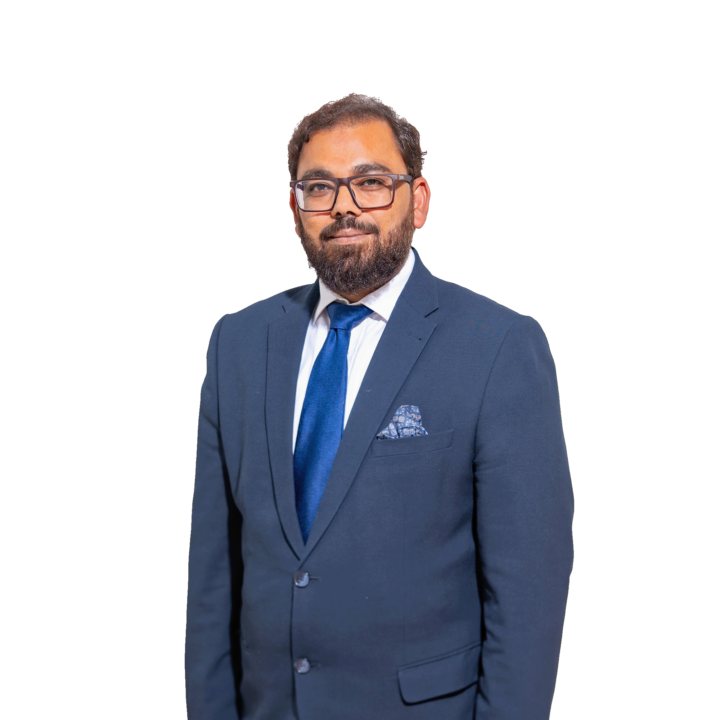
Summar Iqbal Babar
The Kartarpur Corridor
To profile
This research examines the Kartarpur Corridor as a transformative model of trans-local and sub-national diplomacy between India and Pakistan. Connecting shared religious and cultural heritage, it fosters peace through people-to-people contact, emotional healing, and spiritual engagement. Despite structural challenges like political volatility, restricted access, and administrative barriers, the Corridor offers a counter-narrative to hostility. With institutional support and integration into broader cultural diplomacy frameworks, it holds the potential to become a lasting symbol and mechanism of cross-border peace, unity, and reconciliation in South Asia. -
 EconomicsAssociate Fellow
John Austin
Spreading Opportunity – Strengthening Democracy
To profile
During my tenure at the NRW Academy of International Affairs, I will build out Heartlands Transformation Network, conduct and deliver additional original research and insights into effective economic regeneration of heartland regions, and address key issues confronting policy makers and economic development and structural change managers in countries of North America and Europe. All designed to spread economic opportunity and strengthen democracies and our transatlantic alliance. -
 MigrationAssociate Fellow
Chisomo Banda
Youth Perspectives on International Migration Policies
To profile
The research will explore the nuanced experiences and views of young people in relation to existing international migration policies. It will further identify the unique challenges they face, such as disrupted education and social exclusion, and to offer recommendations for more inclusive and effective migration frameworks that are in favour of young people. The ultimate goal is provide valuable insights for improving policies to better address the needs of young migrants. -
 International RelationsAssociate Fellow
Chiung-Chiu Huang
De/securitizing China: The Impacts of Security Community on States’ Strategic Assessments
To profile
This research explores how regional security communities shape national strategies in response to global challenges. By comparing Germany (EU/NATO) and Vietnam (ASEAN), it examines how these groups influence members’ views on threats and change. The findings will enhance understanding of diverse multilateralism and how nations adapt amid great power rivalries, offering insights for both scholars and policymakers. -
 Chinese PoliticsAssociate Fellow
Anna Shpakovskaya
The Changing Logic of China’s Strategic Subnational Diplomacy: The Case of the Sino-German City Partnership in NRW
To profile
This project explores the evolving strategies of Chinese subnational diplomacy, with a particular focus on city partnerships between Chinese cities and those in North Rhine-Westphalia, Germany. By analysing the driving forces, key actors, practices, and intercity dynamics within China’s urban clusters (城市群), the study highlights the interplay between domestic priorities and international imperatives in shaping China’s global diplomatic agenda. The study emphasises that these city-to-city partnerships function as microcosms of broader geopolitical and socio-economic trends, exerting influence on EU-China relations and contributing to the reconfiguration of global governance frameworks. By situating city diplomacy within the context of China’s global rise, this project illuminates how subnational cooperation complements and enhances China’s state-led diplomatic efforts, offering a nuanced perspective on the intersection of local and global political processes. -
 Political ScienceAssociate Fellow
Bernhard Stahl
When foreign policy does not speak – the silencing of mass atrocities in foreign policy
To profile
The research project aims to investigate the under-theorized concept of silence within the realm of foreign policy analysis, particularly concerning the silencing of mass atrocities. This project seeks to address the gap in social-constructivist foreign policy research by examining how silence operates and its implications for foreign policy decisions and discourse. The research is motivated by the observation that, despite the widespread acceptance of silence as a significant factor in political science and related social sciences, it has not been adequately explored within foreign policy analysis. The project posits that foreign policy silence does not merely equate to the absence of speech but includes the strategic omission or downplaying of critical issues. This form of silence can shape perceptions and policies in profound ways, often leaving significant matters unaddressed. The project’s theoretical framework challenges the prevailing logocentric focus on articulated language in foreign policy studies. By incorporating silence into the analysis, the studies aim to provide a more holistic understanding of foreign policy. This approach will involve the conceptualization of silence, distinguishing between different types of silence such as imposed silence (resulting from violence or institutional constraints) and purposive silence (intentional non-communication). Empirically, the project will focus on the foreign policies of Germany, France, the United Kingdom, and the United States. This comparative case study will explore how these democracies, which theoretically should engage in open discourse on such severe crimes, often remain silent. By analyzing this silence, patterns and motivations behind the lack of articulation in foreign policy regarding mass atrocities will be uncovered. -
 International RelationsAssociate Fellow
Adam Bower
Governing outer space security: assessing opportunities and challenges
To profile
Outer space technologies—rockets, satellites, and their supporting terrestrial infrastructure—are critical enablers of modern information-centric societies, with applications ranging from intelligence collection, nuclear early warning, and targeting precision-guided weapons to telecommunications and the internet, mapping and geolocation, environmental monitoring, and weather forecasting. Space systems thus contribute to forms of military, environmental, and human security and are increasingly understood to constitute a key element of national defence and economic power. At the same time, leading space powers are developing counterspace capabilities to threaten adversaries’ satellites. There are widespread concerns that outer space governance is insufficient to manage these security challenges, with significant ambiguities and gaps in existing rules. Fundamental obstacles include competing approaches led by China and Russia and the US and other Western states, respectively, with corresponding risk of the fragmentation of space governance.
My research examines the status and potential trajectories of outer space governance, specifically concerning the characterisation and regulation of military space operations. I theorise the processes through which international norms and legal rules are promoted and resisted and collect empirical data to assess the nature and extent of such change. My fellowship will be dedicated towards advancing two related projects. First, I examine how the unique physical properties of Earth orbit enable and constrain the use of space technologies for (terrestrial) security missions. Second, I identify mechanisms and processes through which norms regulating military space activities may emerge and transform. My overarching goal is to better integrate outer space into the study of global politics and generate new academic knowledge which can in turn inform policy deliberations among governmental, non-governmental, and commercial space actors aimed at preventing armed conflict in outer space.