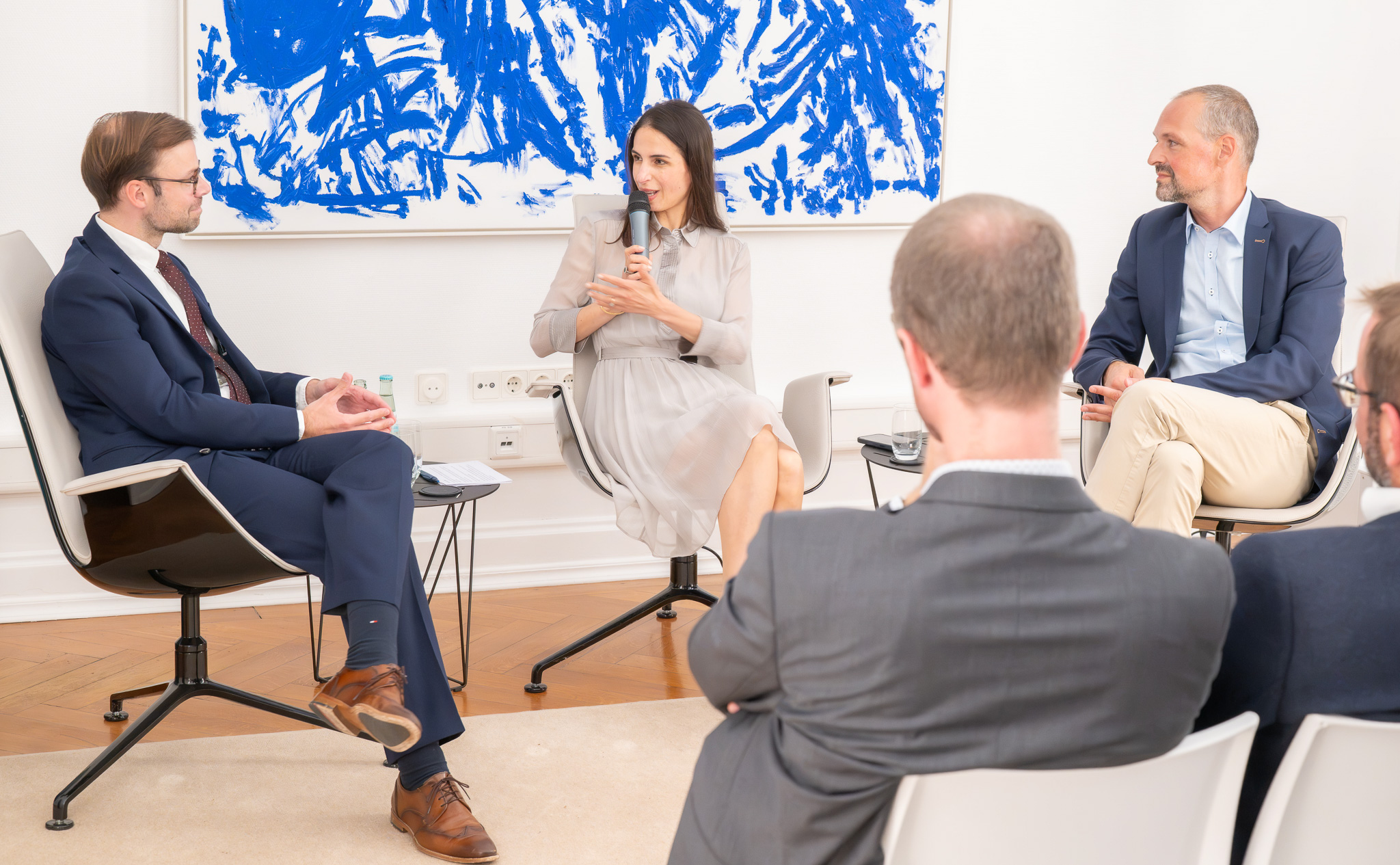
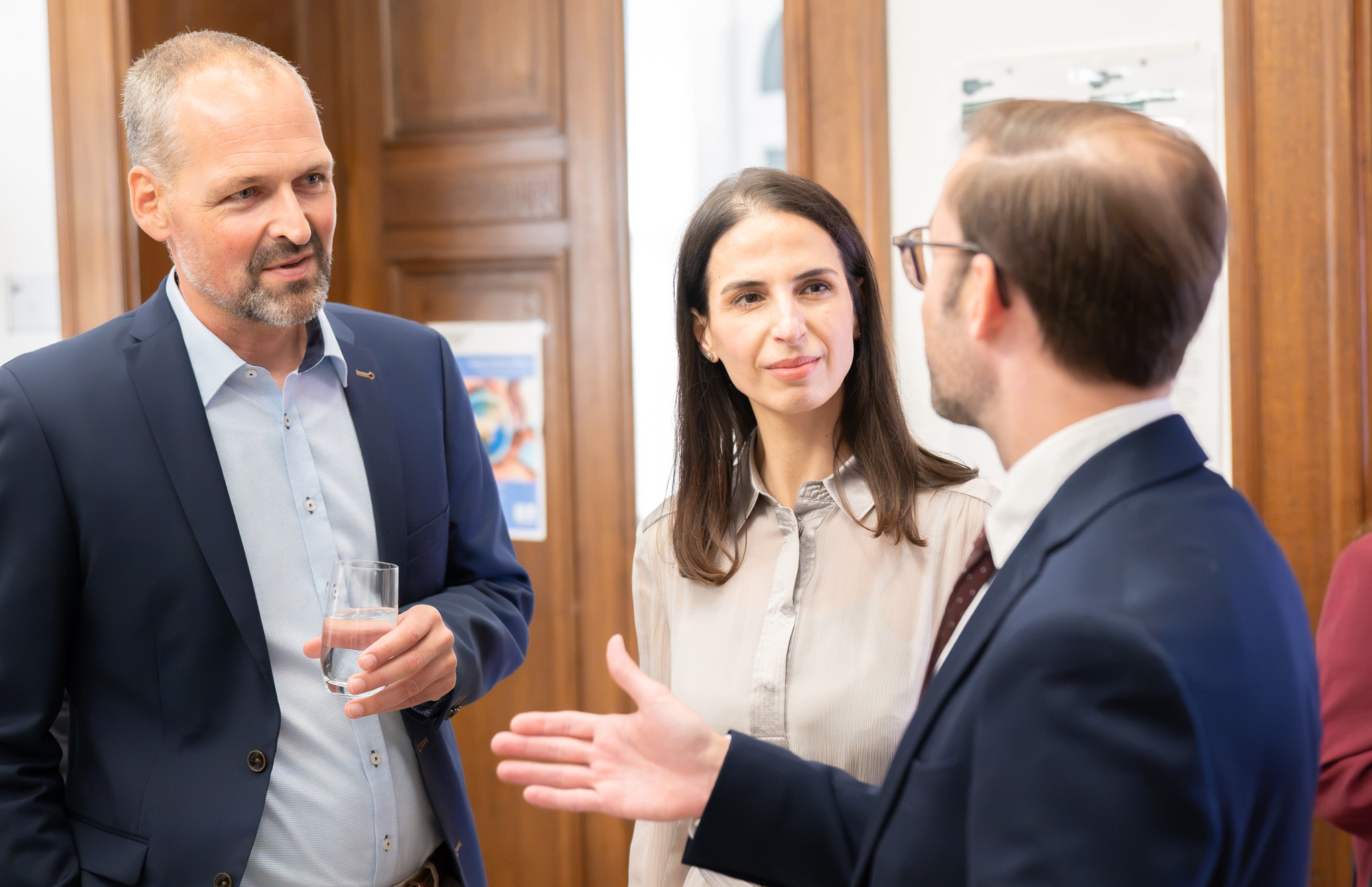
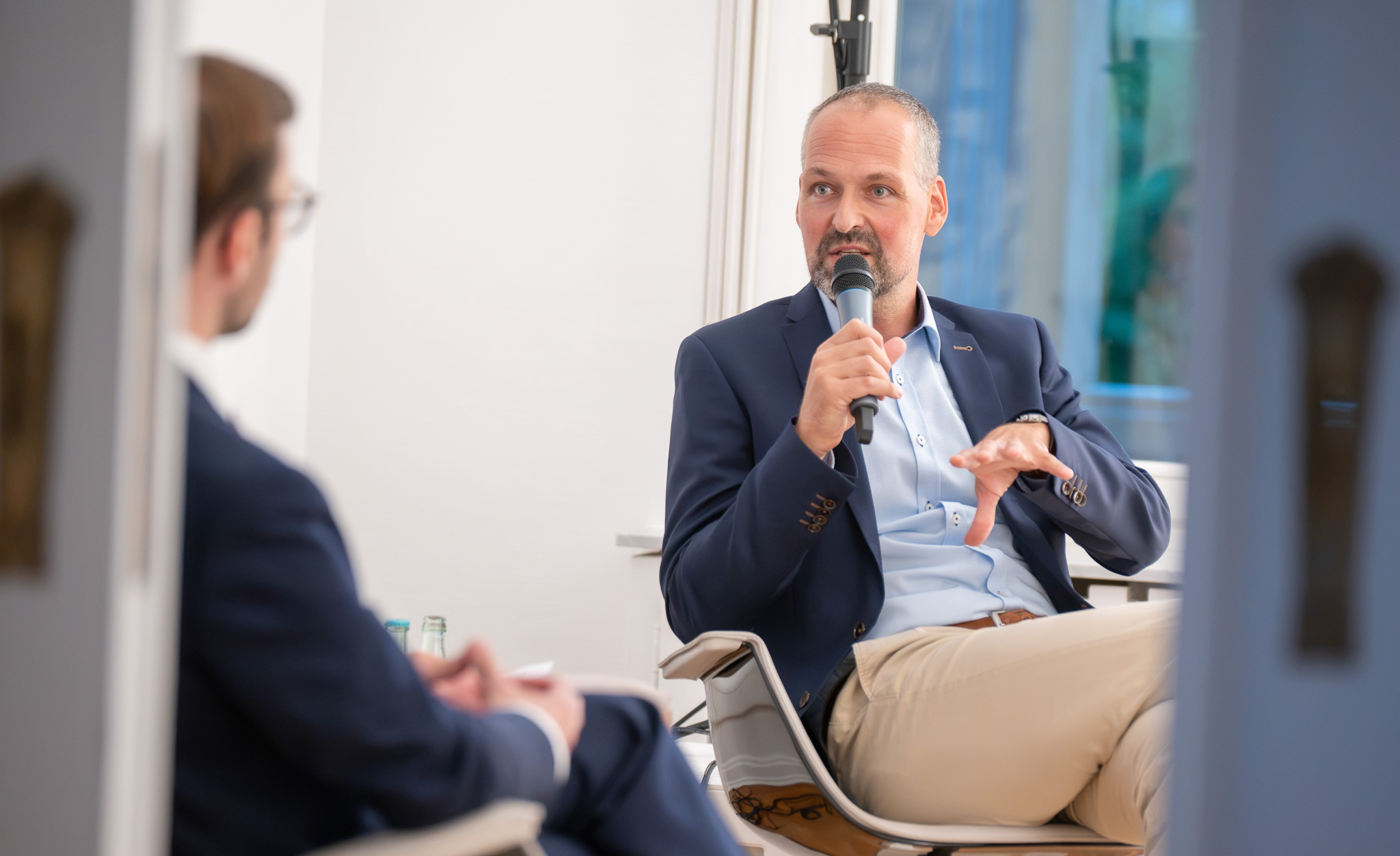
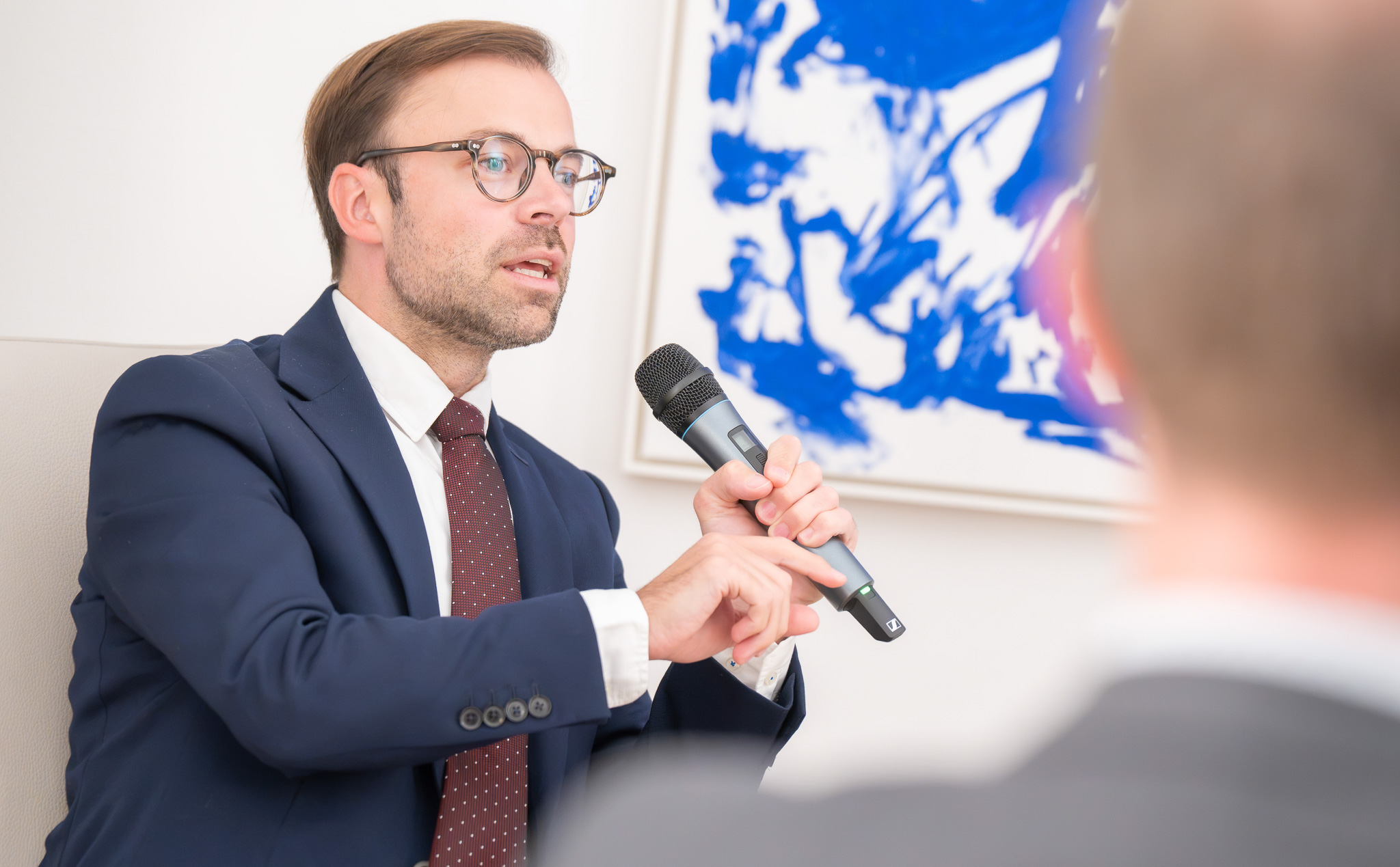
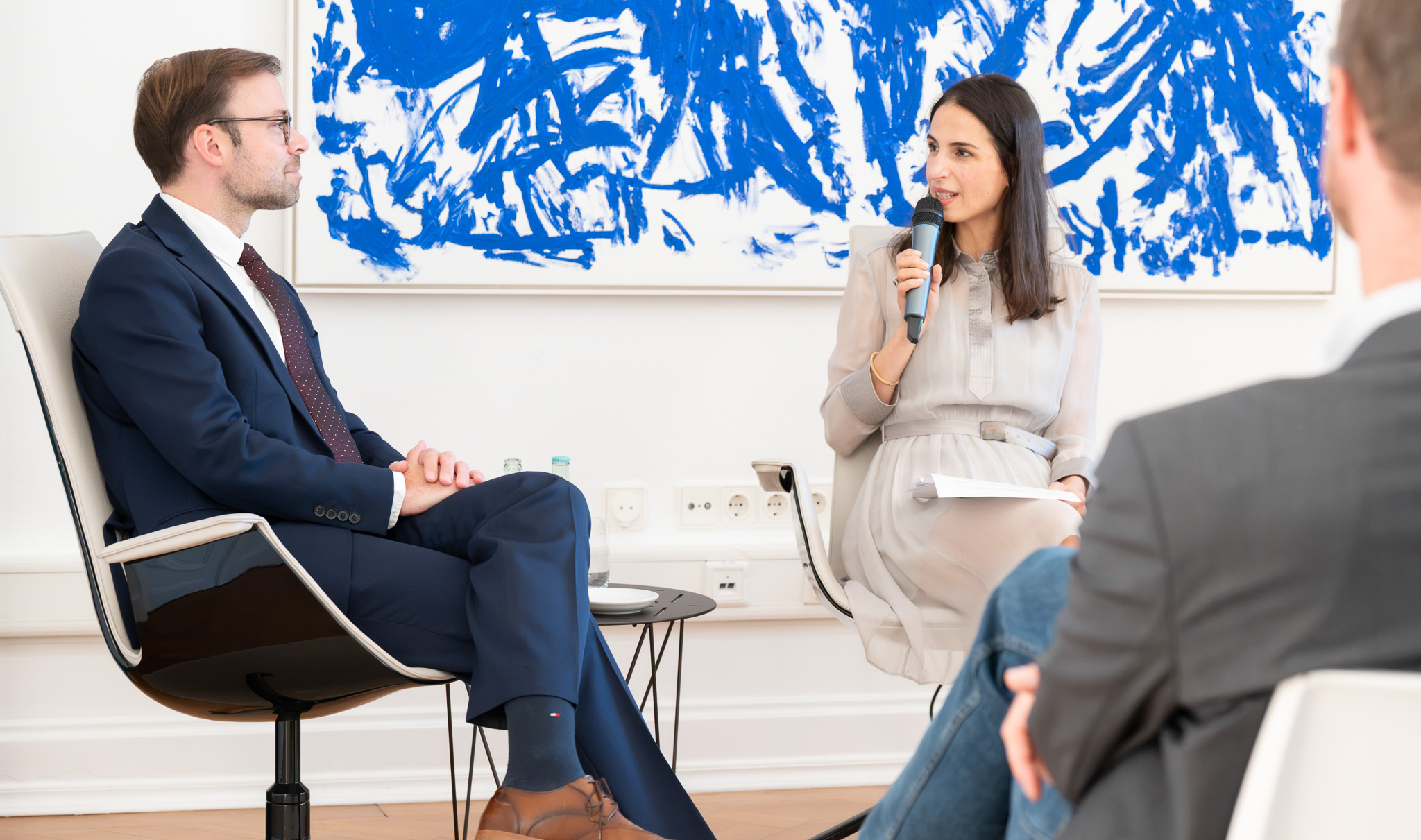
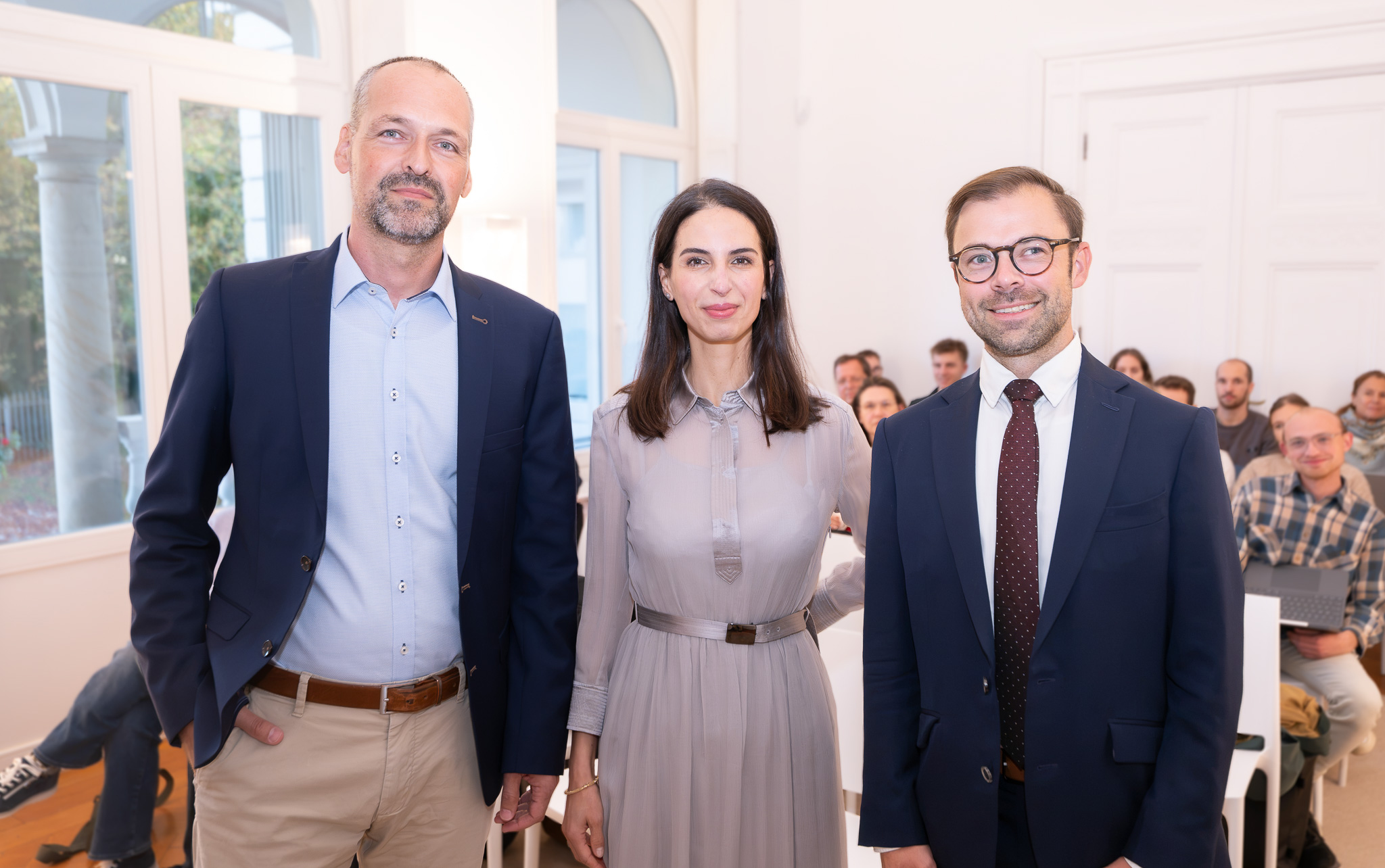
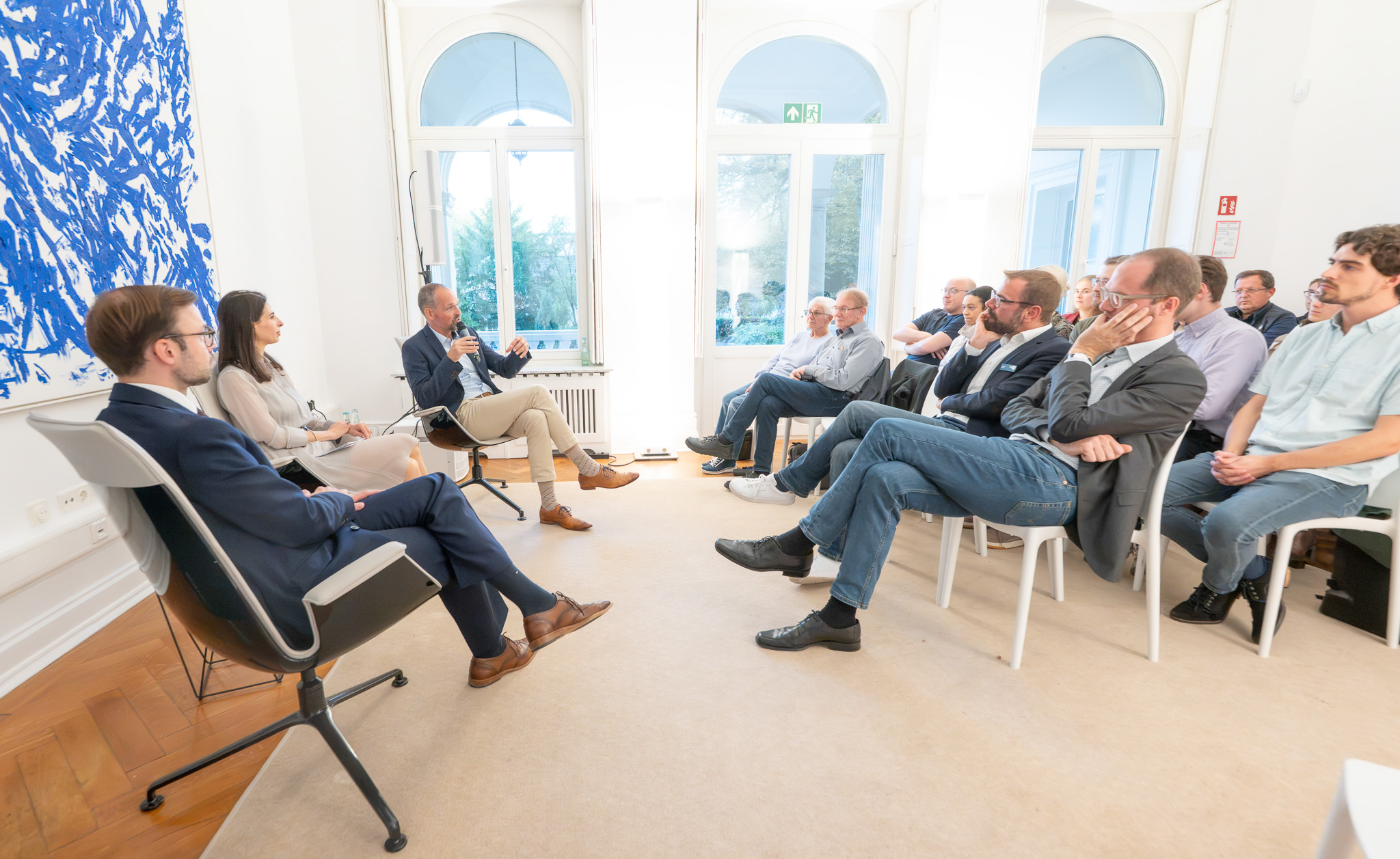
The American studies scholar and author Tobias Endler and Hendrik Ohnesorge, Managing Director of the Centre for Advanced Security, Strategic and Integration Studies (CASSIS) at the University of Bonn, discussed political developments in the US and their implications for Germany and Europe. The event was moderated by AIA Director Mayssoun Zein Al Din.
The discussion centred on the question of how significantly domestic political tensions in the United States are influencing transatlantic relations. The starting point for the discussion was the upcoming mid-term elections to the US Congress. The mid-term elections were viewed not merely as a test of domestic political sentiment, but as an expression of deeper political and societal trends. Polarisation, social conflicts and the intensifying struggle for political narrative dominance are shaping the United States and posing considerable challenges to the political system. The extent to which domestic political pressure in the US affects foreign policy – and thus also Europe – was discussed. Germany, in particular, faces the challenge of maintaining its close partnership with the US whilst at the same time relying more heavily on its own capacity for action.
During the discussion, Tobias Endler also presented his new book „USA. Der neue Feind. Trump war erst der Anfang“. The title itself points to the central argument that the political tensions in the United States cannot be explained solely by Donald Trump’s presidency. Rather, it is a matter of longer-term social and political developments that extend beyond individual terms of office and presidents. The discussion also raised the question of how Europe can respond to an increasingly unpredictable political environment. Rather than remaining permanently in crisis and reaction mode, Europe must focus more closely on its own interests, capabilities and strategic options. The event thus not only offered an analysis of American domestic politics, but also turned its attention to the future of transatlantic relations and Europe’s role in a changing international order.